
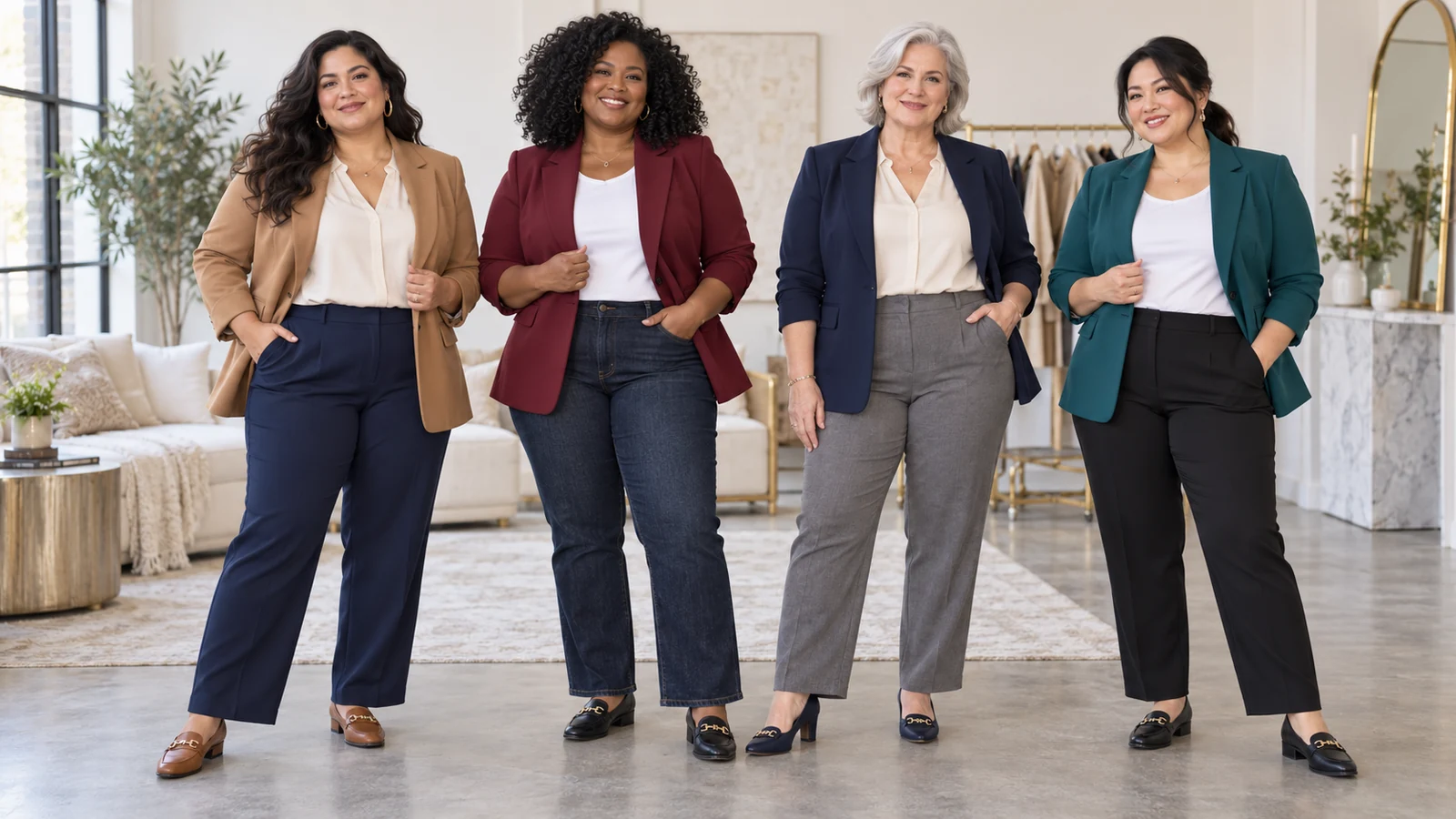
How should a blazer fit? Start with comfortable shoulders, enough room across the bust and sleeves that let you move naturally. A well-fitting blazer should work with the clothes you plan to wear underneath, whether that is a light blouse, a T-shirt or a thin sweater.
For curvy, plus-size and midsize women, the shoulders, bust and waist may need different amounts of room. These practical checks will help you compare blazer styles and choose a fit that feels comfortable for work, everyday outfits and dressier occasions.
1. Decide Whether You Want a Tailored, Relaxed or Oversized Fit

Before judging the size, identify the intended shape. A tailored blazer usually follows the body more closely, a relaxed blazer leaves additional room, and an oversized blazer deliberately creates a broader silhouette.
Look at the product description and photos for clues such as dropped shoulders, a straight waist or an extended length. These details may be intentional rather than signs that the blazer is too large.
Even an oversized blazer should let you move comfortably and stay reasonably settled on your body. You should not need to keep pushing the shoulders back into place.
Style Tip: Choose the silhouette you enjoy first, then check its fit. A tailored blazer does not need to fit tightly to look polished.
2. Check Where the Shoulder Seams Sit
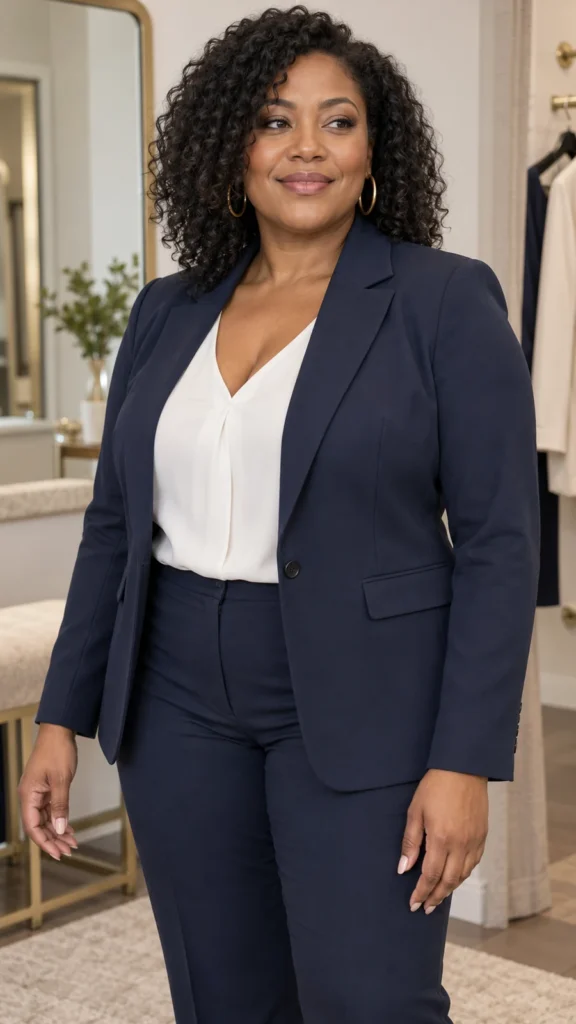
For a conventional tailored blazer, the shoulder seam generally sits near the outer edge of your shoulder. The fabric should lie smoothly without digging into the shoulder or collapsing noticeably beyond it.
Some relaxed and oversized designs intentionally place the seam farther down the arm. Judge those styles according to their construction rather than applying the same seam position to every blazer.
Reach forward and raise your arms slightly. If the shoulders feel restrictive or the upper back pulls tightly, you may need more room or a different cut.
Style Tip: Give shoulder comfort priority when choosing a blazer. Major shoulder alterations can be more involved than adjusting a sleeve hem.
3. Give Your Bust Comfortable Room
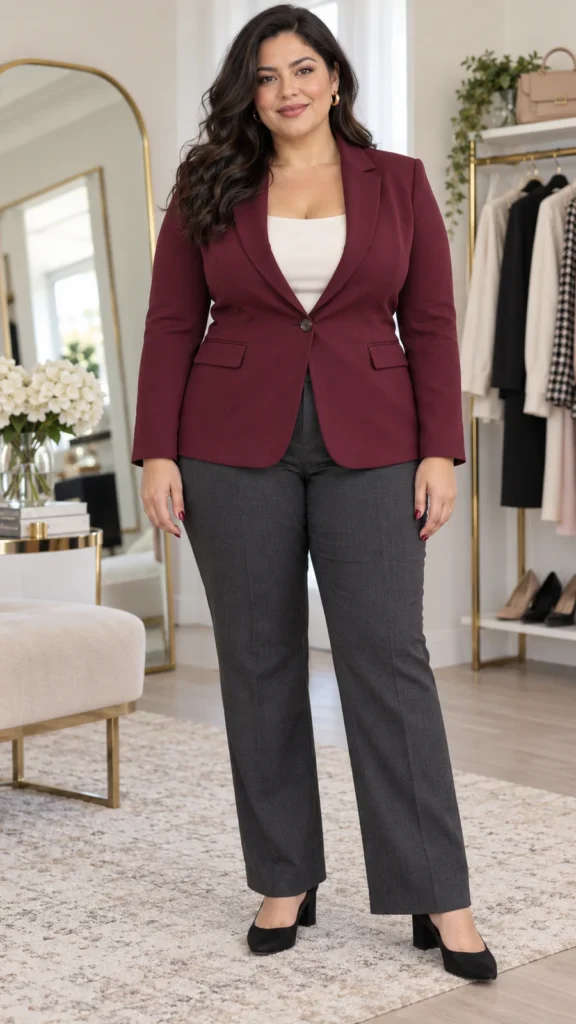
The blazer should have enough room across your bust for the layer underneath. Check it with your usual bra and the type of top you expect to wear most often.
Notice whether the front edges pull apart sharply, the lapels lift away from your chest or the fabric forms strong tension lines near the bust. These can indicate that the blazer needs more room or a different front shape.
If you prefer wearing your blazer open, assess how it hangs in that position. An open blazer should still feel comfortable across the shoulders, back and upper arms.
Style Tip: Do not judge bust fit using a much thinner layer than you plan to wear. A blazer that works over a camisole may feel different over a sweater.
4. Test the Button Closure Without Pulling
If you intend to wear the blazer fastened, close the intended button or buttons while standing naturally. The front should close without needing to hold your breath or pull the two sides together.
Look for pronounced X-shaped pulling around the button, a strained buttonhole or front panels that lift noticeably. A larger size may help, but another cut may provide better room without making the shoulders too loose.
Button placement also affects comfort. A closure positioned higher or lower than you prefer can change how the blazer sits across the bust and waist.
Style Tip: Choose a blazer that closes comfortably if fastening it is part of your outfit plan. Wearing it open should be a preference rather than the only way it fits.
5. Check the Upper Back and Armholes
Reach forward as though you are using a keyboard, holding a steering wheel or giving someone a hug. The upper back should allow this movement without feeling tightly stretched.
Check the armholes too. They should not pinch into your underarms, and the lining should move comfortably with the outer fabric.
A structured blazer may offer less freedom than a cardigan, but it should still accommodate ordinary movements. If you feel restricted whenever you reach, try another size, sleeve construction or fabric.
Style Tip: Test the activities you actually do. Comfortable standing fit alone is not enough for a blazer you will wear through a working day.
6. Check Sleeve Length and Elbow Movement
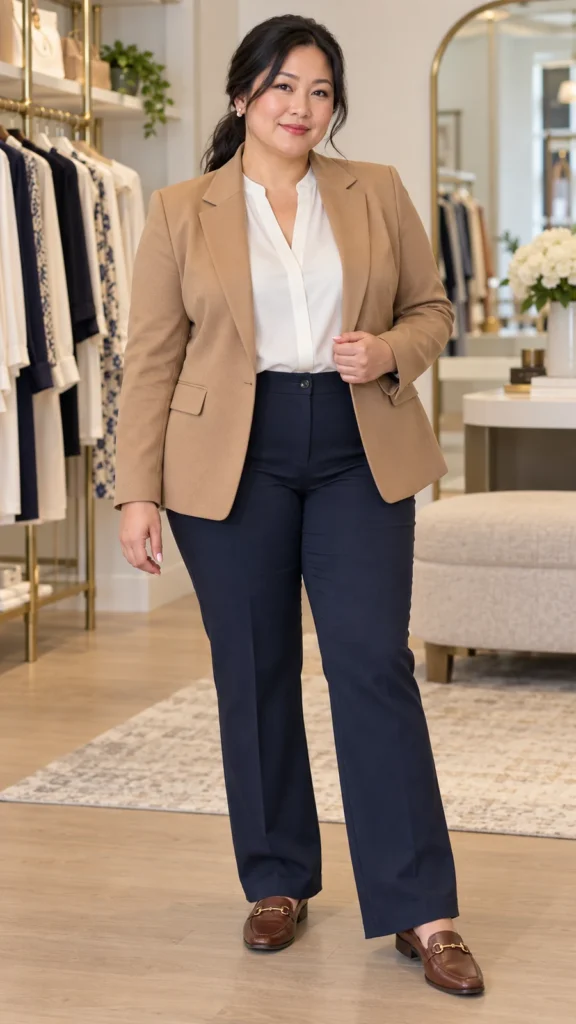
For a conventional full-length blazer sleeve, the hem often finishes around the wrist area. Your preferred position may vary with the design and whether you want a shirt cuff to show.
Three-quarter sleeves, bracelet sleeves and deliberately long sleeves follow different styling choices. Check the description before treating their length as a sizing problem.
Bend your elbows and reach forward. The sleeves should allow movement without gripping tightly around the upper arms or elbows. Some movement at the cuff is normal.
Style Tip: Sleeve shortening may be possible, but working buttonholes, decorative cuffs and lining can affect the alteration. Ask a tailor before buying with changes in mind.
7. Choose a Blazer Length That Works with Your Outfits
Blazers can finish near the waist, at the hip or farther down the thigh. There is no single correct length for every height or body shape.
Try the blazer with the trousers, jeans, skirts or dresses you plan to wear. Notice whether the hem creates the proportions you like and whether you can sit comfortably without the fabric bunching excessively.
If you are shopping online, check the listed back length and how the brand measures it. Petite and tall ranges may change the sleeve length, waist placement and overall proportions as well as the hem.
Style Tip: Compare blazer length using a garment you already enjoy wearing. Measure from the same starting point used in the product description.
8. Understand the Fit of Single-Breasted and Double-Breasted Blazers
A single-breasted blazer has one front overlap with one column of buttons. A double-breasted blazer has a wider overlapping front and usually two columns of buttons.
Neither style belongs to a particular body shape. What matters is how the individual blazer fits your shoulders, bust and waist, and whether you like its appearance open or fastened.
For a double-breasted style, check that the overlapping panels sit comfortably when secured. An internal fastening, when included, helps position the front and should also feel comfortable.
Style Tip: Try both styles rather than ruling one out based on your size. Different brands can produce noticeably different shapes within the same blazer category.
9. Consider Fabric, Lining and Your Usual Layers
Woven blazers with little stretch generally need sufficient room built into the garment. Stretch fabrics may offer flexibility, but they should not need to stretch tightly across your body to fit.
Check the lining as well as the outer fabric. A flexible outer layer can still feel restrictive if the lining has less give.
Try your likely combinations: a blouse for work, a T-shirt for casual wear or a light sweater for cooler weather. If you need heavier layers, look for a cut designed to accommodate them.
Style Tip: Choose your size around realistic layering needs. Extra room is useful only when the shoulders, sleeves and overall shape still work for you.
10. Complete a Sitting and Movement Test
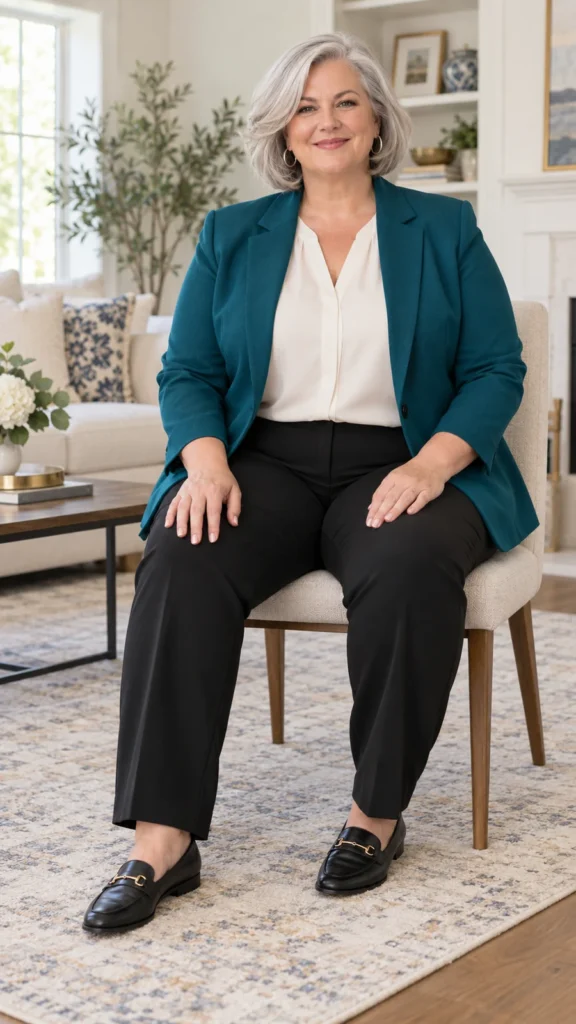
Before keeping the blazer, wear it indoors with your intended outfit and follow the retailer’s return conditions. Check how it feels through several everyday movements.
- Stand naturally with your arms relaxed.
- Fasten the blazer if you plan to wear it closed.
- Reach forward and bend your elbows.
- Sit in a chair and check the shoulders, sleeves and waist.
- Walk a few steps and notice whether the blazer shifts.
- Check the front, sides and back in a mirror.
You may prefer to unbutton a structured blazer when sitting. However, the shoulders, back and sleeves should remain comfortable in that position.
Style Tip: Notice repeated adjustments. Constantly pulling down the hem, moving the shoulders or freeing tight sleeves can suggest that another cut would work better.
Blazer Fit Checklist
- The shoulder position suits the intended design.
- The bust has enough room for your usual layer.
- The front closes comfortably if you plan to fasten it.
- The lapels sit reasonably smoothly without strong pulling.
- The upper back and armholes allow everyday movement.
- The sleeves feel comfortable when you bend your elbows.
- The sleeve and body lengths suit your outfit preferences.
- The lining does not restrict movement.
- You feel comfortable standing, reaching and sitting.
Frequently Asked Questions
Should I size up in a blazer?
Not automatically. Compare your measurements with the exact size chart and try the blazer with your usual layers. If sizing up improves the bust but makes the shoulders too loose, another cut may work better.
Should a blazer button comfortably?
Yes, if you intend to wear it fastened. The closure should not create strong pulling or feel restrictive. A blazer designed to be worn open may have different construction, so check the product details.
How should an oversized blazer fit?
It should have the extra room and shoulder position intended by the design while still allowing comfortable movement. Oversized does not mean the blazer needs to slip around or overwhelm your preferred proportions.
Why does my blazer pull across the upper back?
It may need more room across the back or shoulders, or the armhole and sleeve shape may not suit you. Check the fit while reaching forward and compare another size or cut.
Can a tailor fix blazer fit?
Some changes, such as adjusting sleeve length or taking in part of the waist, may be possible. Shoulder, armhole and major bust changes can be more complex. Ask a tailor about the specific garment before relying on alterations.
Choose a Blazer That Works Beyond the Mirror
A comfortable blazer should suit your preferred silhouette and make room for your normal layers and movements. Start with the shoulders and bust, then check the closure, sleeves and length.
When those details work together, your blazer becomes easier to wear with the outfits you already own—from jeans and a simple top to tailored trousers or a dress.
Once you have checked the fit, explore our plus-size blazer outfits for women over 40 and 50.
YOUR PERSONAL STYLE TOOLS
Want your next look styled together?
Build a personalized outfit or complete your existing look with matching hair, nails, shoes and accessories.