

Knowing how to choose a wrap dress can make shopping easier, especially when your bust, waist and hips need different amounts of room. The right dress should close comfortably, stay secure as you move and let you adjust the waist without pulling the neckline out of place.
Whether you prefer a flowing midi for everyday wear or a polished dress for a wedding, start with the construction, measurements and fabric. These practical checks can help curvy, plus-size and midsize women find a comfortable fit without relying on the size label alone.
3 Featured Looks From This Article
Explore outfit ideas highlighted from this edit. Exact links open their listed product; other links show similar Amazon styles.
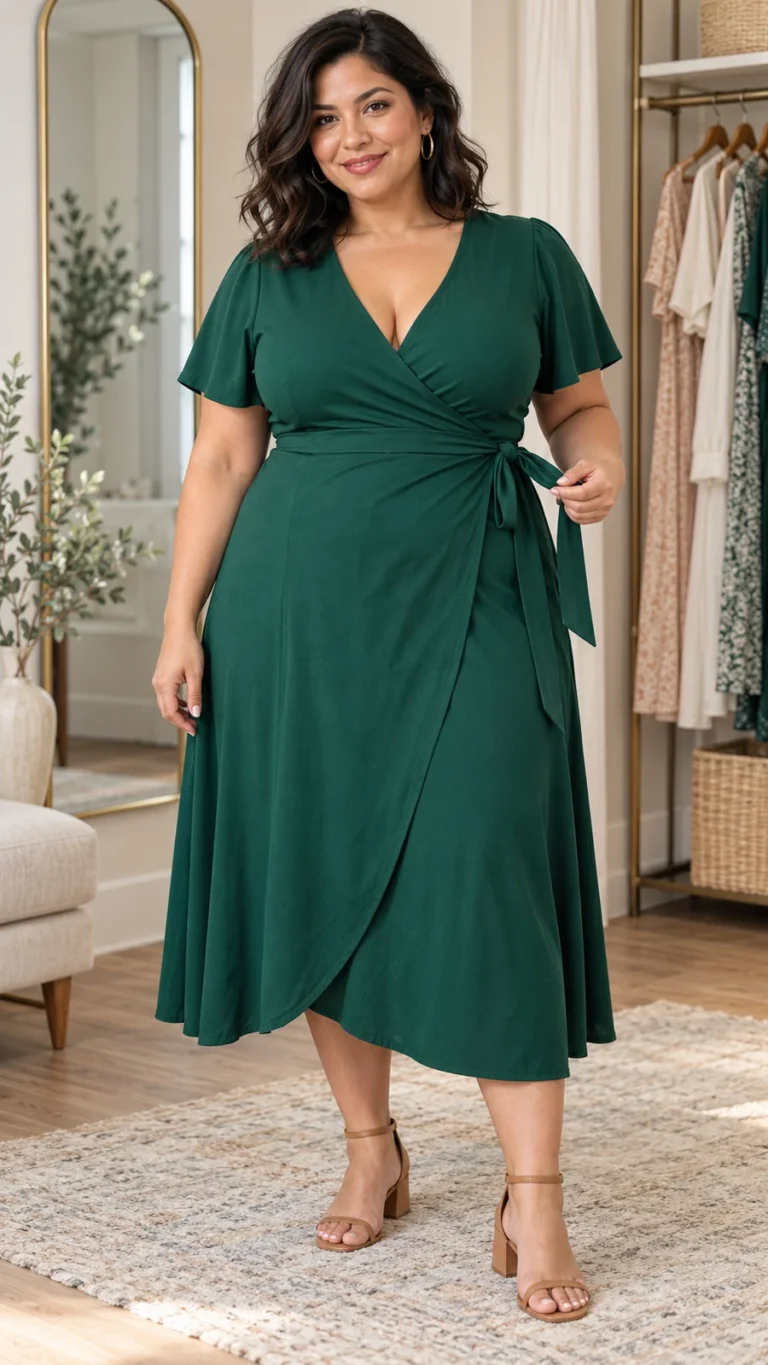 LOOK 01Know the Difference Between a True Wrap and a Faux Wrap DressFIND SIMILAR STYLES Amazon search results, not an exact match
 LOOK 02Find a Comfortable Waist-Tie PositionFIND SIMILAR STYLES Amazon search results, not an exact match
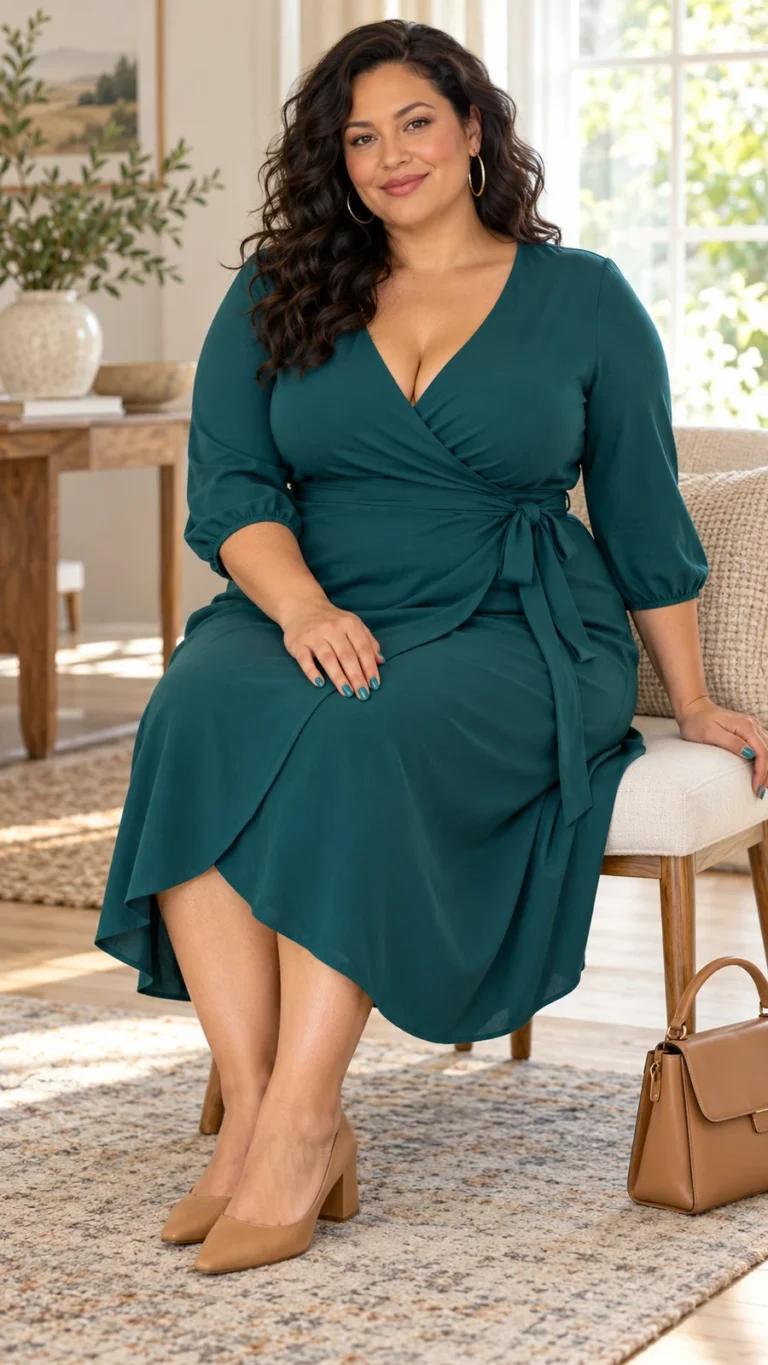 LOOK 03Complete a Real-Life Try-On Before Keeping the DressFIND SIMILAR STYLES Amazon search results, not an exact match
Paid links. Images are editorial styling inspiration; confirm the product’s current details and available sizes on Amazon.
1. Know the Difference Between a True Wrap and a Faux Wrap Dress
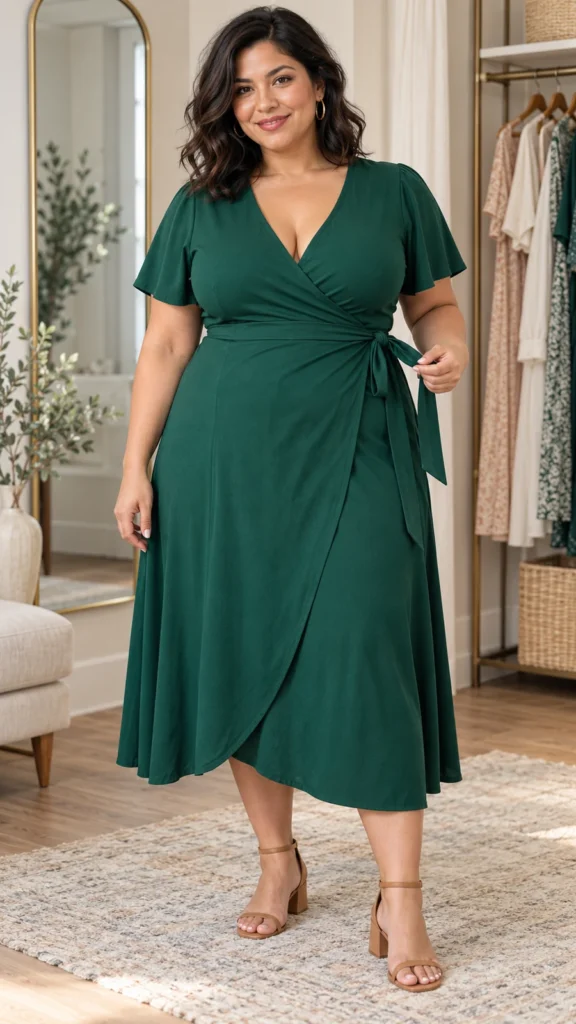
A true wrap dress opens at the front and closes by overlapping one side over the other, usually with an inside fastening and an outside tie. This gives you some flexibility at the waist, although the amount depends on the design.
A faux wrap dress has a wrap-style neckline or skirt, but the overlap is stitched in place. It may pull on or have a zipper. A decorative waist tie does not necessarily make the dress adjustable.
Before buying online, read the closure details and examine the product photos. Look for an internal tie, button, snap or other fastening rather than assuming every wrap dress works the same way.
Style Tip: Choose a true wrap when waist adjustment matters to you. Consider a faux wrap if you prefer a fixed closure and simpler dressing.
2. Compare Your Bust, Waist and Hip Measurements
Use your current measurements and the size chart for the exact dress. Different brands—and different styles within one brand—can use different measurements.
- Bust: Measure around the fullest part while wearing the bra you expect to wear with the dress.
- Waist: Follow the brand’s measuring instructions. Your natural waist may sit above or below where the dress tie falls.
- Hips: Measure around the fullest part of your hips and seat, keeping the tape level.
A wrap closure can adjust the waist within a limited range, but it cannot reliably create extra room across a tight bust, sleeve or fitted skirt. If your measurements fall into different sizes, check the garment’s cut, stretch and sizing guidance before choosing.
Style Tip: Give priority to areas that are harder to adjust, such as the shoulders and bust, while checking that the waist and skirt still fit comfortably.
3. Check the Bust and Neckline Together
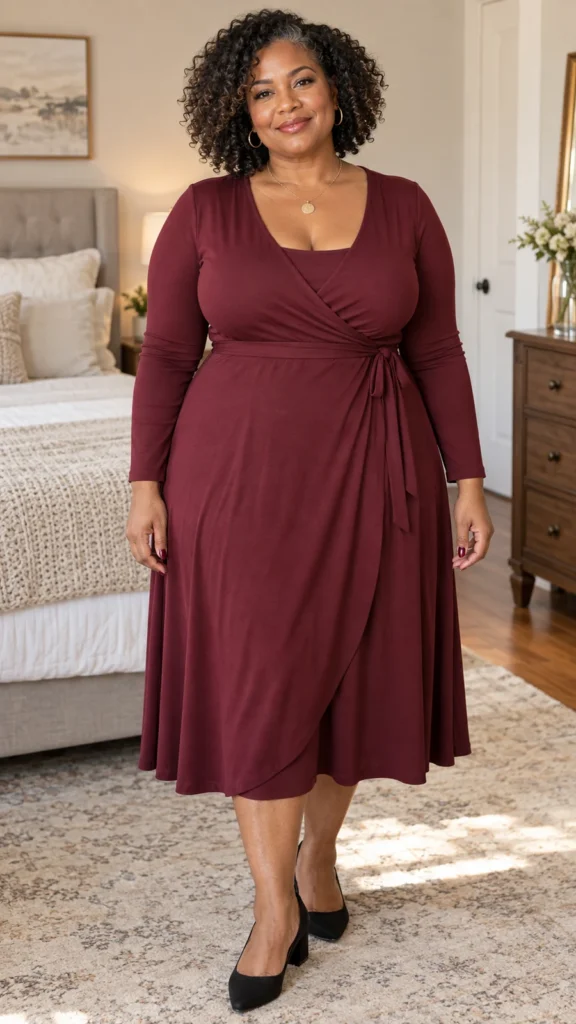
The bodice should cover your bust comfortably without needing constant adjustment. Look for enough fabric across the chest and an overlap that stays in your preferred position when you stand naturally.
If the neckline pulls open, the dress may need more bust room, a different bodice shape or a different size. A neckline that hangs away from your body can also reflect excess room or a cut that does not suit your proportions.
Check for pulling at the armholes, shoulder seams and under the bust. Tightening the waist tie to close the neckline can create tension elsewhere, so assess the whole bodice rather than the neckline alone.
Style Tip: Try the dress with your intended bra before deciding on the fit. A bra that changes your bust position can also change how the neckline sits.
4. Find a Comfortable Waist-Tie Position

The waist tie should feel secure without digging in. Depending on the design, it may sit at your natural waist, slightly above it or closer to an empire position under the bust.
Notice where the dress’s waist seam, tie opening and belt loops fall. These features usually determine where the dress closes; moving the tie far away from them can distort the bodice or skirt.
Fasten any inside closure first, then bring the outer panel across and tie it with comfortable tension. If you have to pull very tightly to keep the dress closed, check the sizing and overlap.
Style Tip: Tie the dress while standing comfortably, then sit down. You should be able to breathe normally and move without the tie pressing into your waist.
5. Check the Skirt Overlap While Walking and Sitting
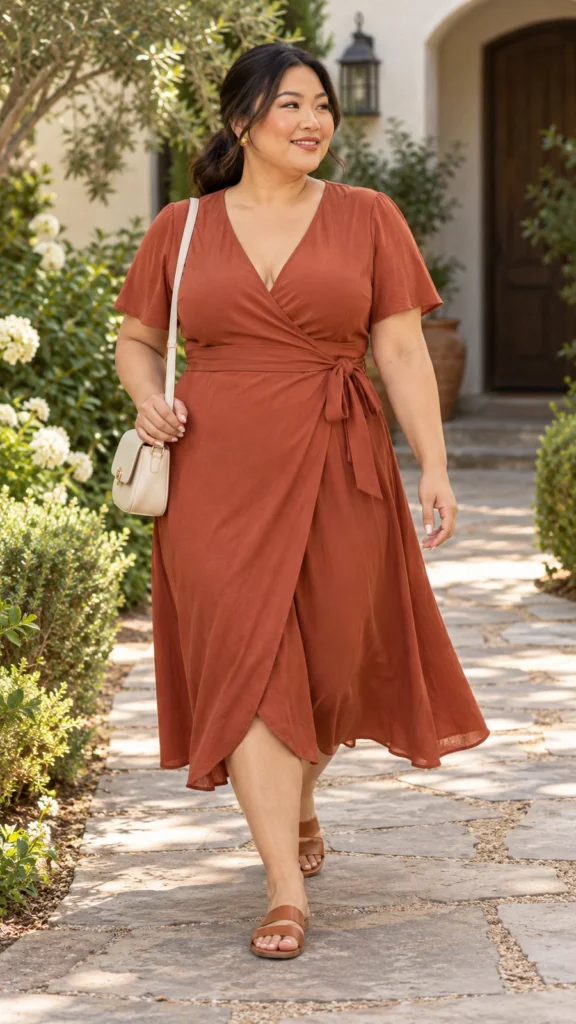
A wrap skirt can sit neatly while you are standing and open more as you move. Walk several steps, sit in a chair and step up onto a low stair to check whether the overlap provides the coverage you want.
Pay attention to the fit across your hips and seat. A skirt that is stretched tightly across these areas may separate more easily, while a fuller cut may provide more room. The amount of overlap matters as much as the skirt’s overall width.
For outdoor occasions, remember that wind can move a lightweight wrap panel. If secure coverage is a priority, consider a dress with an internal fastening, a stitched overlap or a fuller skirt.
Style Tip: Choose an overlap that works during normal movement. Comfortable shorts underneath can provide extra coverage, but they do not correct a skirt that is too tight.
6. Check the Shoulders, Sleeves and Armholes
The waist tie can make a dress feel adjustable even when the upper body is too small. Raise your arms, reach forward and bend your elbows to check the shoulders and sleeves.
Look for armholes that do not pinch and sleeves that allow comfortable movement. In a dress with set-in sleeves, the shoulder seam will usually sit near the edge of your shoulder; dropped-shoulder and other designs are intentionally different.
If lifting your arms pulls the entire dress upward or makes the neckline shift considerably, try another size or cut. A different sleeve shape may suit you better than simply loosening the tie.
Style Tip: Check upper-arm measurements when a brand provides them, especially for fitted sleeves made from fabric with little stretch.
7. Consider Fabric, Stretch and Lining
Fabric affects both fit and coverage. Soft jersey may offer flexibility, while a woven fabric with little stretch generally needs enough room built into the dress for movement.
Stretch fabric still needs to fit comfortably. If it is pulled tightly, the neckline and skirt overlap can shift. A woven wrap dress should let you sit and reach without depending on the tie to compensate for a close fit.
Also check the lining. An outer fabric may stretch while its lining does not, which can limit movement. Lightweight or pale fabrics may need an opacity check in natural light.
Style Tip: Read the fabric composition, lining details and care instructions together. “Soft,” “flowy” and “stretchy” describe different qualities.
8. Check the Dress Length with Your Intended Shoes
Dress length depends on your height, torso proportions and the garment’s design. Use the listed length as a starting point, and check whether the brand measures from the shoulder, neckline or another position.
Try the dress with the shoes you plan to wear. For a midi, check that the hem allows an easy stride. For a maxi, make sure it clears the floor comfortably so you are not stepping on it.
An angled wrap hem may be shorter at the front than at the back. Check the shortest point when standing and sitting rather than judging coverage from the longest section.
Style Tip: Petite, regular and tall ranges can change more than the hem length. Bodice length and waist placement may differ too.
9. Use Small Coverage Adjustments Thoughtfully
A camisole can add neckline coverage if you like a layered look. Some dresses also include a small snap or other closure to keep the bodice overlap in place.
For minor adjustments, a tailor may be able to add a discreet fastening or alter the bodice. What is possible depends on the fabric and construction, so ask before assuming the dress can be changed.
Fashion tape may help hold a small neckline shift temporarily when used according to its instructions. It should not be the main solution for a bodice that is pulling tightly or a skirt with insufficient overlap.
Style Tip: Separate a styling preference from a fit problem. Wanting a higher neckline is different from needing more room across the bust.
10. Complete a Real-Life Try-On Before Keeping the Dress
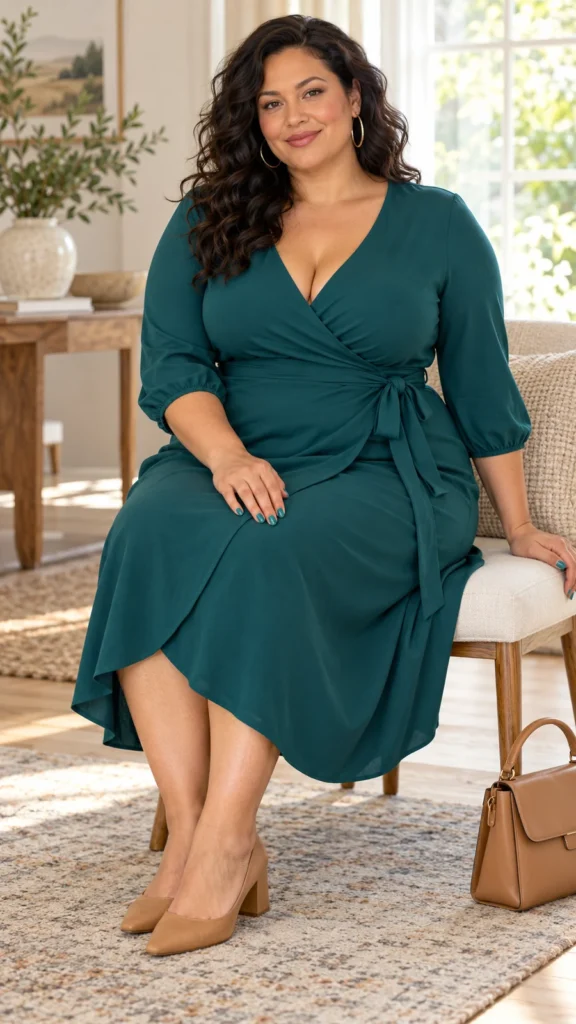
Keep the tags attached while you check the dress indoors, following the retailer’s return conditions. Wear your intended undergarments and shoes, then test the movements you expect during the occasion.
- Stand naturally without holding the neckline in place.
- Sit down and check the waist tie and skirt coverage.
- Walk, turn and take a comfortable step up.
- Reach forward and lift your arms.
- Check the front, sides and back in a mirror.
- Notice whether you repeatedly adjust the neckline, tie or skirt.
A suitable wrap dress should feel comfortable through these movements. If one area works but another consistently pulls, gaps or slips, another cut may be a better option.
Style Tip: Do not judge the dress only from a posed mirror photo. Movement reveals fit issues that a still image can miss.
Wrap Dress Fit Checklist
- The bust has enough room without pulling the neckline open.
- The neckline provides your preferred coverage.
- The waist tie sits comfortably and does not need excessive tightening.
- The shoulders, armholes and sleeves allow movement.
- The skirt overlap works while standing, walking and sitting.
- The fabric and lining feel comfortable together.
- The hem works with your shoes and allows an easy stride.
- You do not need to keep adjusting the dress.
Frequently Asked Questions
Should I size up in a wrap dress?
Not automatically. Compare your measurements with the exact size chart and consider the fabric and cut. If the bust or hips are too tight, a larger size may help, but check that the shoulders, neckline and waist still fit.
Why does my wrap dress gape at the bust?
Possible causes include insufficient bust room, excess bodice fabric or a neckline shape that does not suit your proportions. Check the shoulders and armholes too. Tightening the waist tie is not always the right fix.
Can a wrap dress fit a larger bust and smaller waist?
It can, depending on the bodice shape and adjustment range. Look for enough bust coverage and a waist closure that can tighten comfortably. A fuller-bust design or a different cut may provide a better fit.
Are faux wrap dresses adjustable?
Many have a fixed bodice and skirt, even when they include a waist tie. Check the product description for the closure, stretch and construction before buying.
How do I keep a wrap dress from opening when I walk?
Start with enough hip room and skirt overlap, then fasten any inside closure correctly. If the panel still opens beyond your comfort level, consider a fuller skirt or a dress with a secured overlap.
Choose the Fit That Works for Your Day
The best wrap dress for you has comfortable bust room, a secure closure and enough skirt coverage for normal movement. Check these features together instead of relying on the waist tie to solve every fit issue.
A few minutes spent sitting, walking and reaching can help you choose a dress that feels as good during your day as it looks in the mirror.
For help comparing garment measurements before ordering, read how to read a women’s clothing size chart.
YOUR PERSONAL STYLE TOOLS
Want your next look styled together?
Build a personalized outfit or complete your existing look with matching hair, nails, shoes and accessories.