

Jeans should feel secure at the waist and give you enough room to sit, walk and bend comfortably. If you have wondered how should jeans fit, the answer involves more than getting the zipper closed. The waistband, hips, thighs, rise and length all work together.
For curvy, plus-size and midsize women, finding that balance can take a little comparison. This guide helps you recognize a comfortable fit, understand common problems and decide whether to try another size or a different cut.
3 Featured Looks From This Article
Explore outfit ideas highlighted from this edit. Exact links open their listed product; other links show similar Amazon styles.
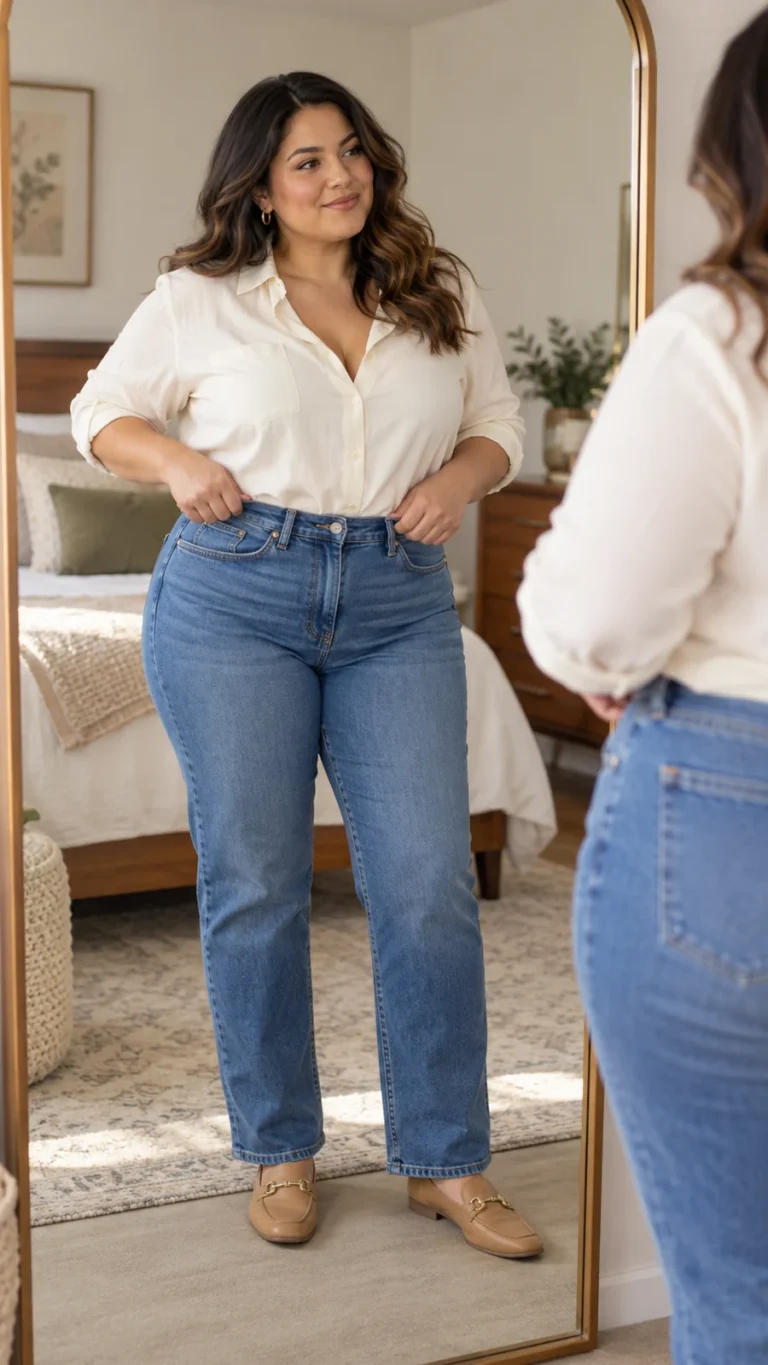 LOOK 01Check the Waistband Without a BeltFIND SIMILAR STYLES Amazon search results, not an exact match
 LOOK 02Choose a Rise That Feels Right Sitting DownFIND SIMILAR STYLES Amazon search results, not an exact match
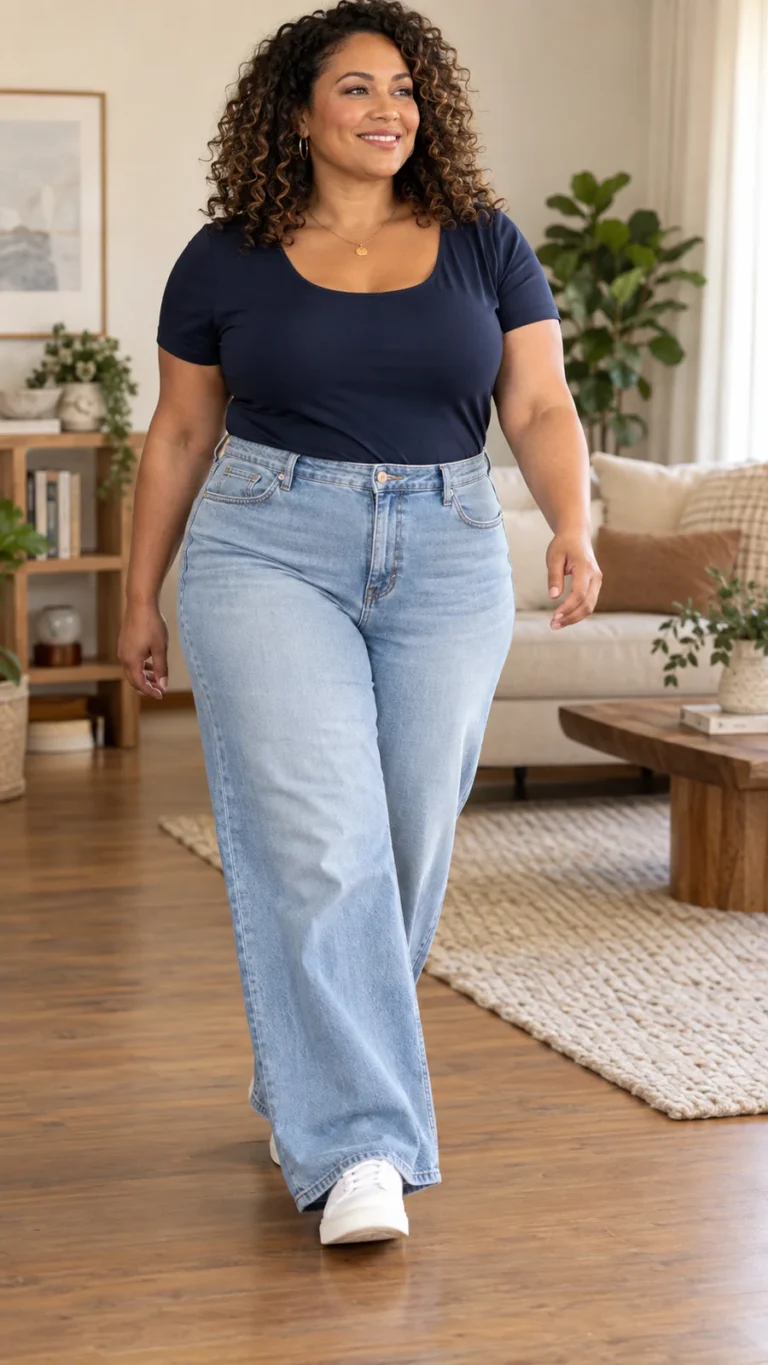 LOOK 03Complete a Real-Life Try-On Before Keeping ThemFIND SIMILAR STYLES Amazon search results, not an exact match
Paid links. Images are editorial styling inspiration; confirm the product’s current details and available sizes on Amazon.
1. Check the Waistband Without a Belt

Fasten the jeans and let them settle at their intended waist position. The waistband should feel secure without uncomfortable pressure. Start without a belt so you can judge whether the jeans stay in place on their own.
Sit down, breathe normally and lean forward slightly. If the waistband digs in, the closure strains or you feel uncomfortable pressure, try another size or rise.
A small gap may be acceptable if it does not bother you. A larger gap that causes slipping can suggest that the waist-to-hip proportions of the cut do not suit you.
Style Tip: A belt can finish an outfit, but it should not have to gather a large amount of excess waistband fabric to keep your jeans up.
2. Give Your Hips and Seat Comfortable Room

Check the fit from the front, side and back. The denim should follow the intended silhouette without making sitting or walking uncomfortable. Close-fitting jeans will sit differently from relaxed styles.
Notice whether the zipper area strains, pockets pull open or the seat feels restrictive when seated. These signs can suggest limited room, though construction and pocket placement may also contribute.
Some folds and creases are normal. Judge them alongside comfort and movement rather than expecting perfectly smooth denim.
Style Tip: If the hips fit but the waistband consistently gaps, compare a curvy cut or another brand’s measurements before sizing down.
3. Choose a Rise That Feels Right Sitting Down
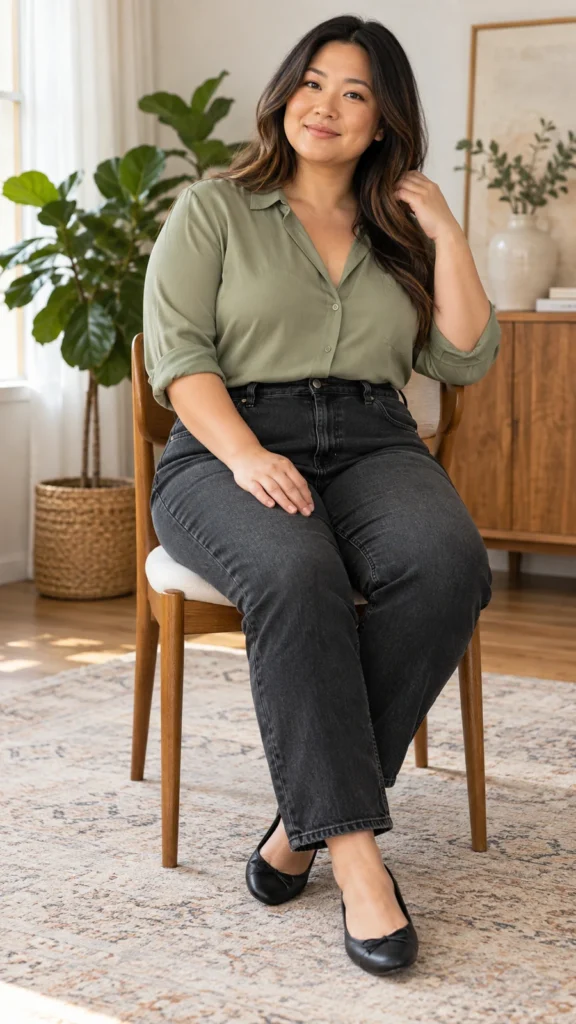
Rise describes the distance from the crotch seam to the top of the waistband. Brands may label rises differently, so the listed measurement is often more useful than the words low, mid or high.
A rise that feels too short may pull at the crotch or sit lower than you want. A rise that feels too long for your proportions may leave excess fabric or place the waistband somewhere uncomfortable.
Try sitting and bending gently. Check whether the waistband stays where you prefer and whether the crotch feels comfortable.
Style Tip: A higher rise is an option, not a requirement for curvy women. Choose the position you enjoy wearing.
4. Check Thigh and Knee Movement
Your jeans should allow your normal stride and comfortable knee movement. Walk across the room, sit in a chair and bend your knees within your usual range.
If the thighs feel restrictive while the waist fits, a different leg cut may help. Straight, relaxed or wide-leg jeans can offer more room, although the actual measurements vary by product.
If the legs feel roomier than you want, compare a slimmer cut rather than automatically choosing a smaller overall size.
Style Tip: Choose the leg shape separately from the waist size. Comfortable thigh room does not need to come from an oversized waistband.
5. Understand How Different Jean Cuts Should Fit
- Skinny jeans: sit close through the legs; flexible fabric should still allow comfortable movement.
- Straight-leg jeans: have a relatively consistent leg shape, with the exact amount of room varying by design.
- Bootcut jeans: widen toward the hem to accommodate footwear and create a flared finish.
- Wide-leg jeans: offer a fuller leg silhouette; extra fabric is part of the intended look.
- Relaxed jeans: provide more room in the areas specified by the design, often through the seat and thighs.
- Curvy-fit jeans: use a different waist-to-hip relationship, but the proportions are not identical across brands.
Use the product description and measurements to understand the intended fit. A relaxed pair should not be judged by how closely skinny jeans follow the legs.
Style Tip: Pick the silhouette you want first, then assess whether its waist, rise and movement work for you.
6. Consider Stretch and Non-Stretch Denim
Stretch denim can provide flexibility when sitting and bending, but the waistband and seams may feel firmer than the rest of the fabric. Check the complete garment rather than assuming stretch will solve tightness.
Non-stretch denim relies more on its cut for movement. Some denim may soften or relax with wear, but the amount is unpredictable.
Choose jeans that feel wearable during the try-on. Do not depend on future stretching to make a restrictive pair comfortable.
Style Tip: Follow product-specific sizing advice. There is no universal rule to size down in stretch jeans or size up in rigid denim.
7. Check the Inseam with Your Usual Shoes

Inseam is measured along the inside leg, from the crotch seam to the hem. Compare the listed inseam with jeans you already enjoy wearing, then try the new pair with your intended shoes.
An ankle-length style may deliberately show more of the shoe. A full-length straight or wide-leg pair may sit closer to it. Bootcut hems often need particular attention because their wider shape can catch beneath footwear if too long.
Check that the hem does not drag or interfere with walking. The best length depends on the cut and the look you prefer.
Style Tip: Petite, regular and tall options can help, but compare their actual inseams before ordering.
8. Notice Twisting, Slipping and Repeated Adjustment
If your jeans twist around the legs, slip down or need constant pulling, reassess the fit. These behaviors can come from size, cut, fabric or construction.
Try resetting the waistband at its intended position, then walk again. If the problem continues, compare another size or a different pair rather than assuming you need to tolerate it.
A different cut may work better when one area feels tight and another feels loose.
Style Tip: Pay attention to what happens after a few minutes of movement. A good standing fit does not always mean a comfortable everyday fit.
9. Try a Curvy Cut When the Waist and Hips Need Different Room
If your hips need more room while the waist remains loose, a curvy cut may be worth comparing. Check the size chart and any garment measurements because brands use the label differently.
Another rise or leg shape may also help. If the overall fit works and only the waistband needs adjustment, ask a tailor whether an alteration is practical.
Get an estimate before the return window closes. Waist alterations can affect pockets, belt loops and other details.
Style Tip: Do not choose a smaller size solely to close a waist gap if it makes your hips or thighs uncomfortable.
10. Complete a Real-Life Try-On Before Keeping Them

Wear the underwear, top and shoes you expect to pair with the jeans. Keep the tags attached and follow the retailer’s return conditions.
- Fasten the jeans without forcing the closure.
- Check the waistband while standing and sitting.
- Walk at your normal pace.
- Bend your knees comfortably.
- Check the rise and seated coverage.
- Notice whether the jeans slip or need repeated adjustment.
- Make sure the hems work with your shoes.
Check the care label too. Washing and drying can affect denim, so choose a pair whose care requirements fit your routine.
Style Tip: Spend a few minutes sitting and moving before deciding. Comfort should last beyond the first mirror check.
Your Quick Jeans Fit Checklist
- The waistband stays in place without uncomfortable pressure.
- The hips and seat allow comfortable sitting.
- The rise feels right for your proportions.
- The thighs and knees allow your usual movement.
- The leg shape matches the intended silhouette.
- The inseam works with your footwear.
- You do not need to keep adjusting the jeans.
Frequently Asked Questions
Should new jeans feel tight?
They may feel close-fitting if that is the intended design, but they should not make ordinary sitting or movement uncomfortable. Do not rely on them stretching later to solve a restrictive fit.
Why do my jeans gap at the back waist?
The waistband may have more room than you need compared with the hips and seat. Try another cut, rise or brand, or ask about a suitable waistband alteration.
Should I size down in stretch jeans?
Not automatically. Follow the product’s guidance and compare the fit while sitting and moving. Stretch denim should still feel comfortable at the waistband, hips and thighs.
Are high-rise jeans best for curvy women?
They are one option. The rise that works best depends on your proportions, comfort and preferred look. Try different rises rather than treating one as a rule.
Are creases around the hips a sign that jeans are too small?
Not always. Denim can crease through normal movement and construction. Look for discomfort, persistent pulling or restricted movement alongside the creases.
Choose Jeans You Can Move In
The right jeans fit comfortably through the waist, hips and rise while giving you the leg shape you want. Use measurements as a starting point, then check sitting, walking and your usual shoes. If one pair does not suit your proportions, another cut may make all the difference.
Compare cuts and proportions in our guide to choosing jeans for your body shape.
YOUR PERSONAL STYLE TOOLS
Want your next look styled together?
Build a personalized outfit or complete your existing look with matching hair, nails, shoes and accessories.