
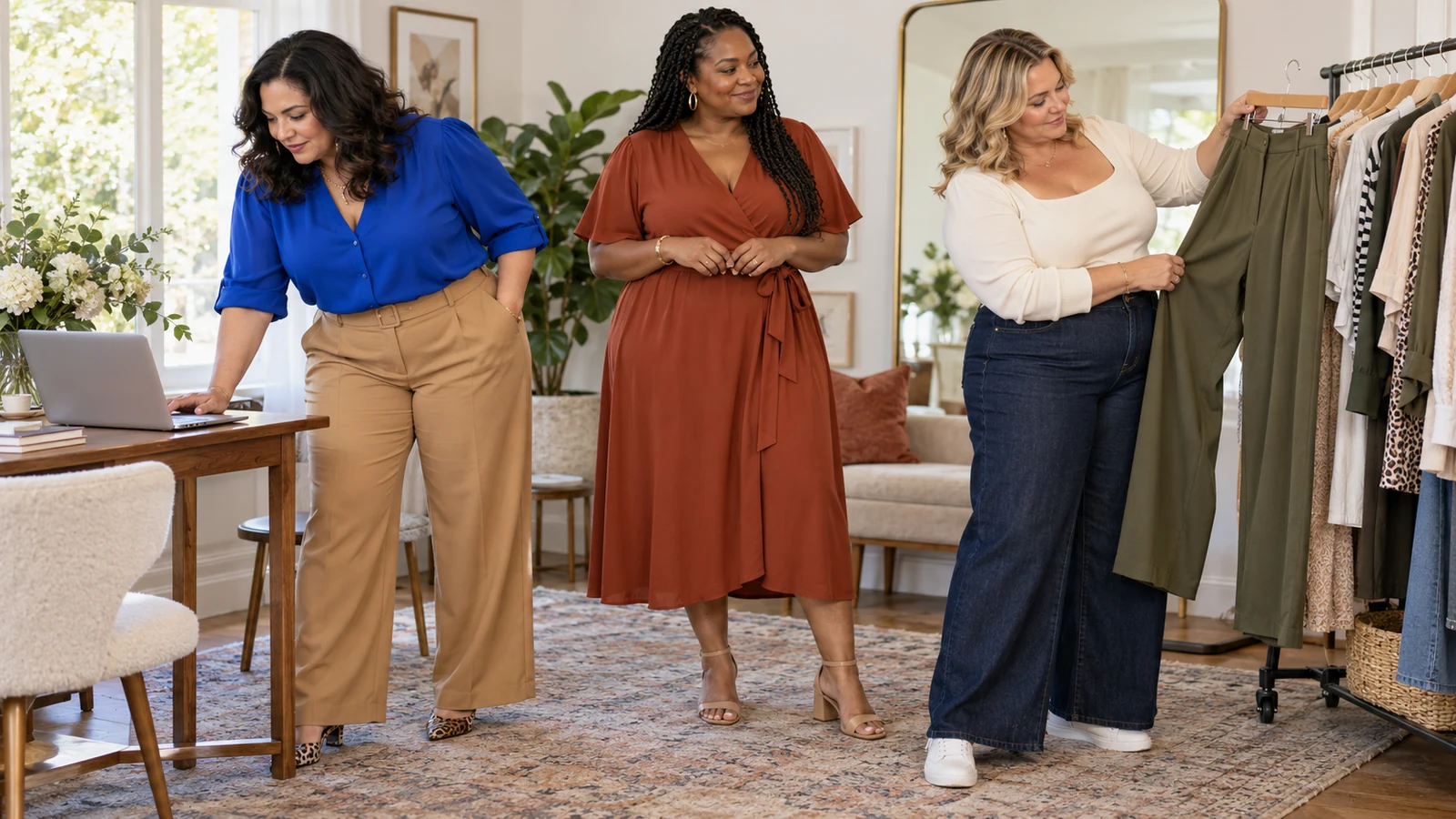
Being between clothing sizes is common, especially when your bust, waist and hips fall into different rows on a size chart. One size may feel comfortable in one area while the next fits better somewhere else. That does not mean there is anything wrong with your proportions.
The most useful approach is to check the exact garment, identify where it needs to fit comfortably and consider its fabric and construction. This guide will help you decide when to try the larger size, when the smaller size might work and when another cut makes more sense.
1. Use the Exact Product’s Size Chart
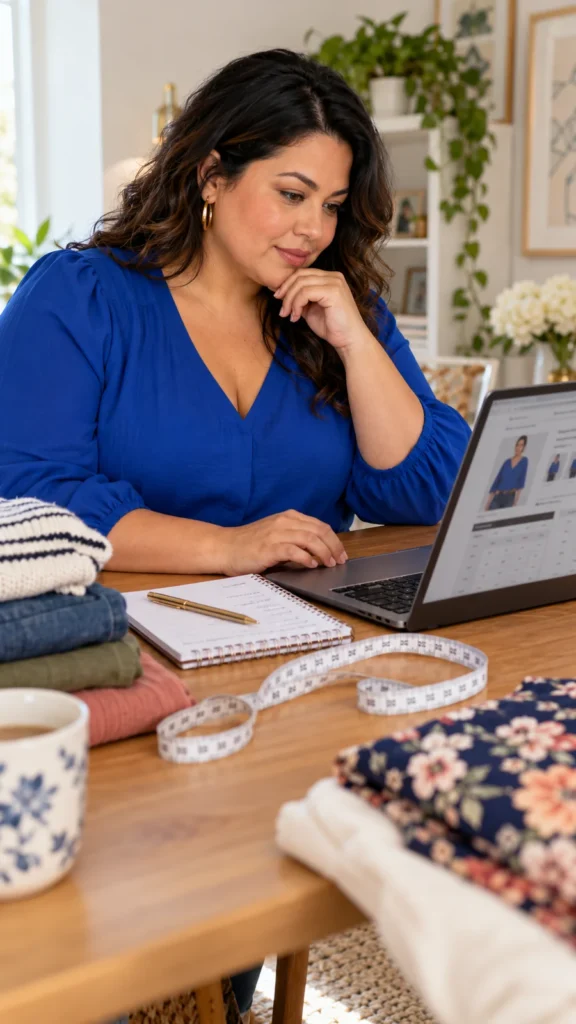
Start with the chart attached to the item you want to buy. Your usual size is a helpful starting point, but the same label can fit differently across brands, collections and garment types.
Compare your current measurements with the chart and check whether it lists body measurements or garment measurements. Body measurements describe the person the size is intended to fit. Garment measurements describe the clothing itself and need to be interpreted alongside the intended fit and fabric.
- Use the correct units: inches or centimeters.
- Check any instructions about where to measure.
- Read whether the product is described as fitted, relaxed or oversized.
- Look for separate sizing guidance for that particular item.
Style Tip: Do not assume that a garment measurement equal to your body measurement will provide a comfortable fit. Non-stretch clothing generally needs room for movement.
2. Identify the Measurement That Matters Most
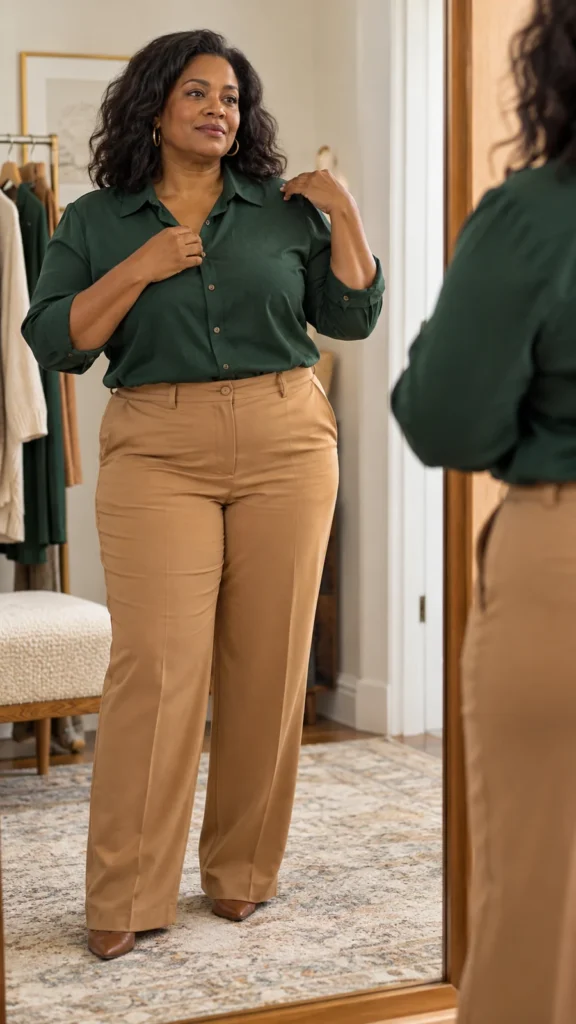
The most relevant measurement depends on the garment. Start with the area where the item is most fitted or least flexible, then check the remaining measurements before choosing.
- Fitted skirt: compare both waist and hips, especially if the fabric has little stretch.
- Pants or jeans: consider waist, hips, thighs and rise.
- Button-front shirt: check bust room, shoulders and upper arms.
- Fitted dress: check bust, waist and hips wherever the design sits close to the body.
- Blazer: pay attention to shoulders, bust, upper arms and the intended closure.
- Jumpsuit: check torso length as well as bust, waist and hips.
A loose skirt attached to a fitted dress bodice may offer more flexibility at the hips than a straight dress. Let the construction guide your decision rather than choosing by one measurement automatically.
Style Tip: Identify the area that needs more room first. Then make sure the selected size still works everywhere else.
3. Check Which Parts Actually Stretch
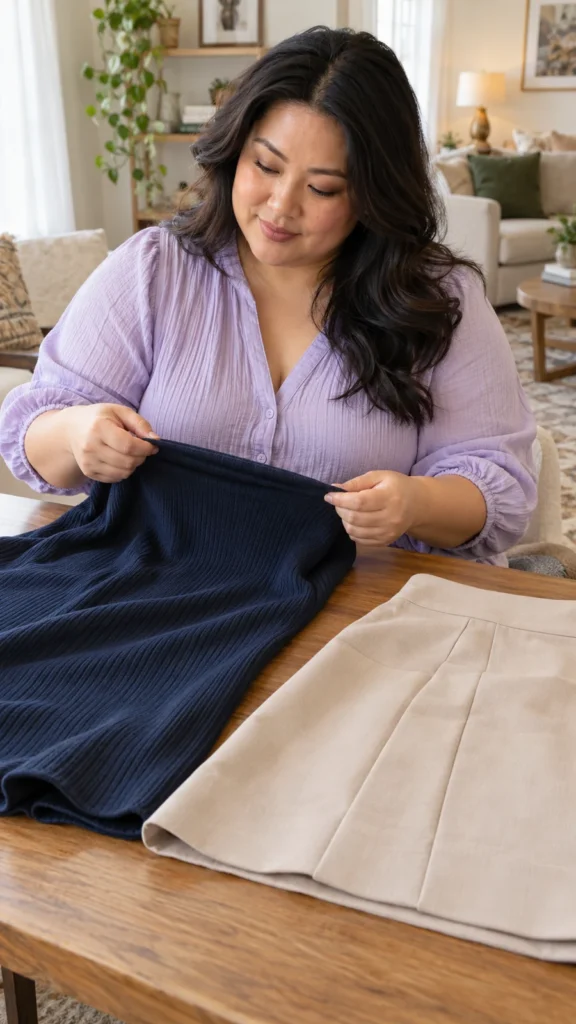
A product described as stretchy may still have a structured waistband, a non-stretch lining or seams that limit movement. Check the whole garment rather than relying on the fabric description alone.
Non-stretch pieces need enough room through their cut to let you sit, reach and walk comfortably. Stretch pieces may accommodate a wider range of measurements, but they should not feel stretched to their limit during ordinary wear.
If the retailer provides specific advice for choosing between sizes, consider it alongside your measurements and preferred fit.
Style Tip: Fabric composition can offer clues, but it does not tell you exactly how much a finished garment stretches or how well it recovers.
4. Try the Larger Size When Movement Feels Restricted
The larger size is worth trying when the smaller one pulls across a fitted area, makes sitting uncomfortable or strains at the closure. This is particularly useful to check with structured clothing and fabrics that have little give.
Look for practical signs rather than expecting every garment to lie completely wrinkle-free. A button placket that repeatedly gaps, pockets that pull open or sleeves that restrict reaching may indicate that you need more room or a different cut.
The larger size should still fit reasonably well through the shoulders, rise and other important areas. Extra room everywhere is not always the best solution.
Style Tip: Compare both sizes through ordinary movement. Choose the one that feels comfortable without needing constant adjustment.
5. Consider the Smaller Size When the Larger One Feels Unstable
The smaller size may be worth trying if the larger one slips down, shifts around or feels much roomier than the intended design. That can happen with elastic-waist clothing or generous cuts, but comfort still comes first.
Check that the smaller size allows you to breathe, sit and move normally. Do not choose it simply because the label is smaller or because the fabric stretches enough to get it on.
With oversized clothing, some extra volume is intentional. Sizing down can change the shoulder placement, sleeve length and overall silhouette.
Style Tip: Choose the fit you enjoy wearing. The number or letter on the label does not need to be a deciding factor.
6. Test the Fit Sitting, Walking and Reaching
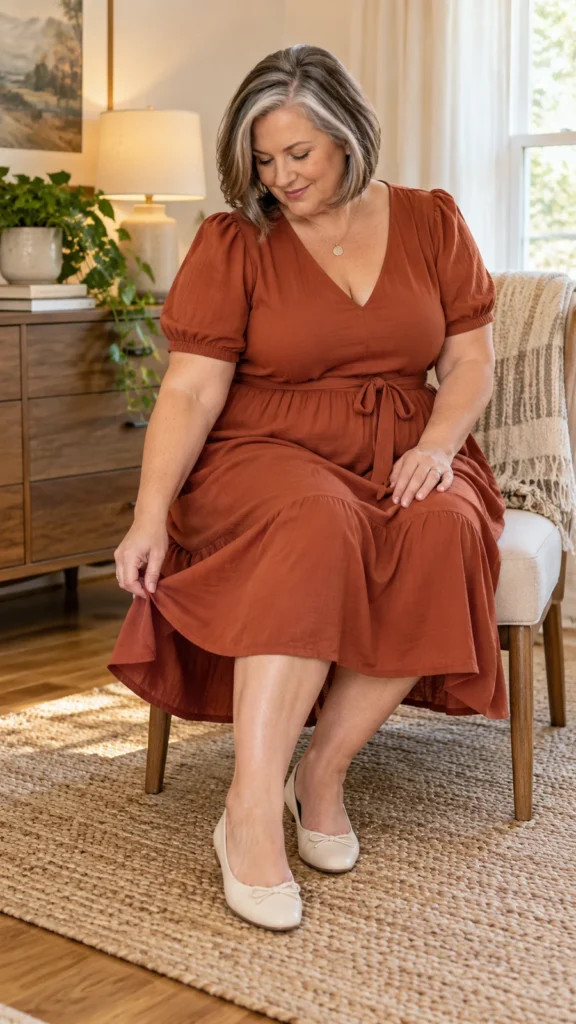
A garment can feel comfortable while you stand still and behave differently once you move. During an at-home try-on, spend a few minutes testing the movements you expect to make in it.
- For bottoms: sit in a chair, walk and bend your knees comfortably.
- For tops: reach forward and lift your arms within your normal range.
- For dresses: sit, walk and check the coverage you prefer.
- For jackets: try the intended closure and reach forward gently.
- For jumpsuits: sit and check whether the torso or crotch feels restrictive.
Keep tags attached and follow the retailer’s return conditions during the try-on. Avoid stretching or altering a garment you may return.
Style Tip: Try clothing with the underwear, shoes and layers you expect to wear. These can affect comfort and how the garment sits.
7. Try a Different Cut When Your Measurements Span Sizes
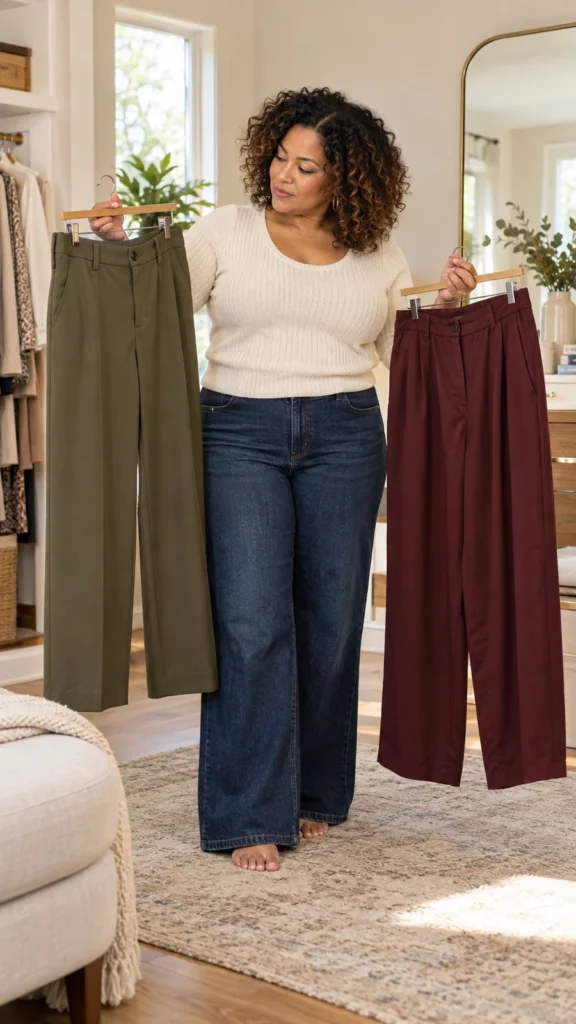
If your waist fits one size and your hips fit another, simply moving up or down may not solve the problem. A different cut may provide the room you need in one area without adding too much elsewhere.
For example, an A-line skirt may offer more hip room than a straight skirt. Some curvy-fit pants are designed with different waist-to-hip proportions, although the measurements vary by brand. Adjustable details can also help, provided they give enough coverage and stay secure.
If standard lengths or rises do not suit you, compare petite, tall or other proportion-specific options where available. Check their measurements rather than assuming the label guarantees a fit.
Style Tip: Look for a cut that suits your proportions and preferred silhouette. You do not have to make one particular design work.
8. Use Reviews as Supporting Information
Reviews can help you spot repeated comments about tight sleeves, generous waists, short lengths or limited stretch. They are most useful when reviewers describe their measurements and the fit they preferred.
A comment such as “runs small” is less specific than an explanation of where the garment felt tight. People also have different expectations of what fitted or relaxed clothing should feel like.
Use reviews alongside the product chart, fabric details and return policy. Avoid making your decision from one review alone.
Style Tip: Look for repeated, specific fit observations rather than treating every sizing comment as a universal rule.
9. Consider Tailoring Before Keeping an Almost-Right Fit
If the garment fits comfortably overall but needs one adjustment, tailoring may be an option. Shortening a hem or adjusting some waistbands can be practical, depending on the construction.
Other changes, including shoulders, rise or lined garments, may be more involved. Letting clothing out also depends on whether there is enough fabric available in the seams.
Ask a tailor what is possible and what it will cost before the return window closes. Compare that with the price and usefulness of the garment.
Style Tip: Do not buy something very tight assuming it can be made larger. Confirm the alteration first.
Your Between-Sizes Shopping Checklist
- Check the exact product’s size chart.
- Compare current measurements using the correct units.
- Identify the garment’s most fitted areas.
- Check fabric, lining, waistband and construction.
- Consider your preferred fitted or relaxed look.
- Test normal movement during the try-on.
- Compare another cut if neither size feels right.
- Review return conditions before ordering or altering.
Frequently Asked Questions
Should I always size up when I am between clothing sizes?
No. The better choice depends on your measurements, the garment’s cut, its flexibility and the fit you want. Try the larger size when the smaller one restricts movement, but check that it still fits well elsewhere.
What if my bust, waist and hips fall into three different sizes?
Focus first on the areas where the garment is fitted, then check all relevant measurements. A different cut, separates or a suitable alteration may work better than choosing one size by default.
Should I size down in stretchy clothing?
Not automatically. Stretch clothing still needs to feel comfortable, and its lining or waistband may be less flexible. Follow product-specific guidance and check the fit while moving.
Why does my usual size fit differently in another brand?
Brands can use different measurements, cuts and fit preferences for the same size label. Fabric and garment construction also affect how an item feels.
Is it better to buy separates when a dress does not fit both my top and bottom?
Separates let you choose a different size for each piece, which can be useful. A dress with a different silhouette or adjustable details may also suit your proportions.
Choose Comfort Before the Size Label
When you are between clothing sizes, use the label as a starting point. The better choice is the garment that gives you the coverage, movement and silhouette you want. Check the measurements, try ordinary movement and give yourself permission to choose another cut when neither size feels right.
For help understanding the numbers before choosing, read how to read a women’s clothing size chart.
YOUR PERSONAL STYLE TOOLS
Want your next look styled together?
Build a personalized outfit or complete your existing look with matching hair, nails, shoes and accessories.