As an Amazon Associate I earn from qualifying purchases. Affiliate links may earn a commission at no additional cost to you.
Jump to hairstyle ideas
TOOLS FOR YOUR ROUTINE
Hair Styling Essentials
Paid links · Search options; check suitability and current details on Amazon.Braided hairstyles for short hair work best when you use the length you have rather than forcing every section into a full braid. A small side braid, half-up connection or carefully planned cornrow detail can leave the rest of your haircut loose.
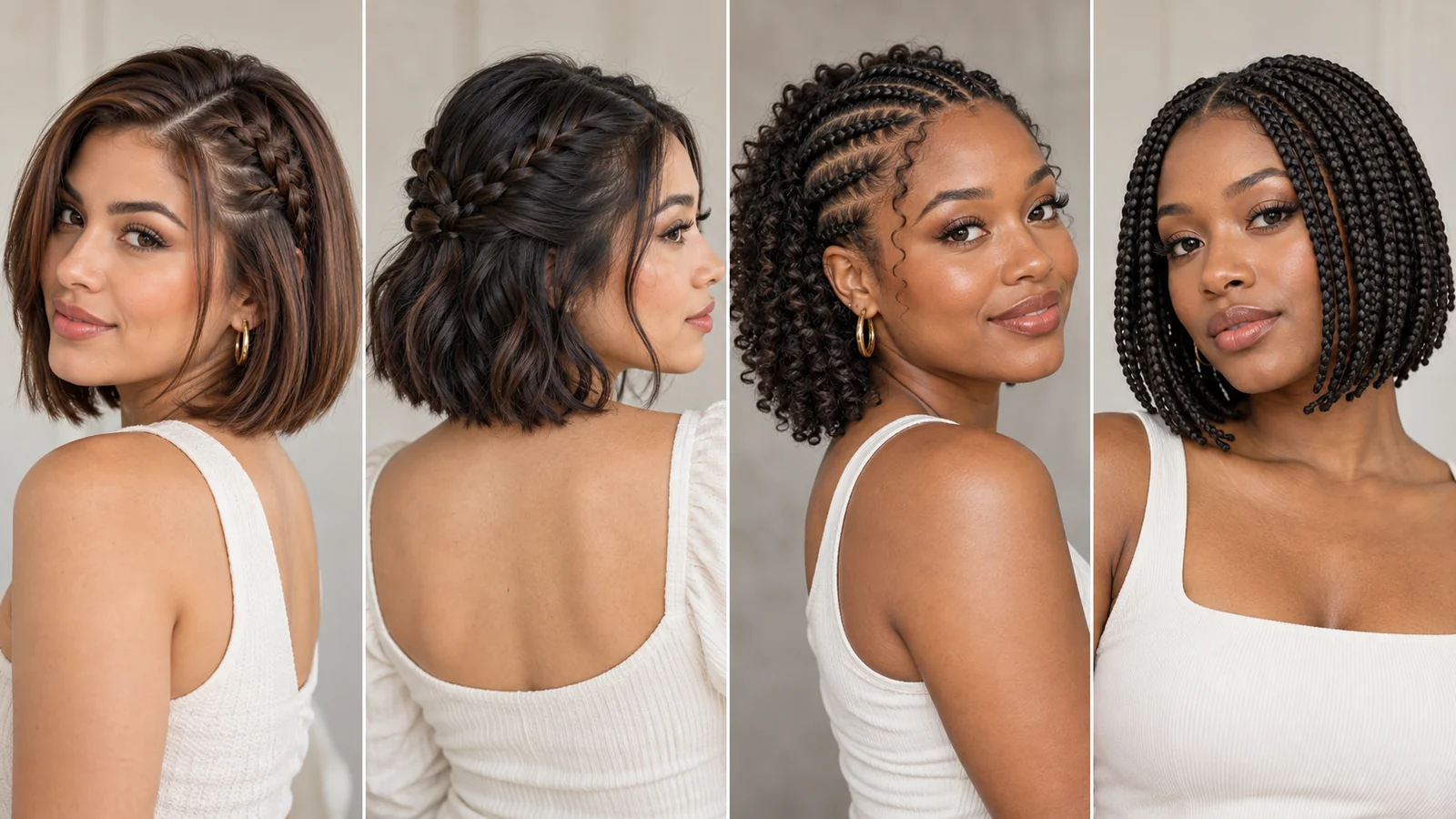
These 15 ideas cover bobs and short curly or coily shapes. Some need longer front sections, and professionally braided looks may use extensions. Check the length notes before choosing your reference.
Start With a Comfortable Section
Choose a section that crosses easily without pulling at the roots. Short layers may leave a few ends visible; that does not mean the braid needs to be tighter. Use smooth fastenings suited to your hair, and loosen any style that feels painful.
1. Small Side Braid on a Bob
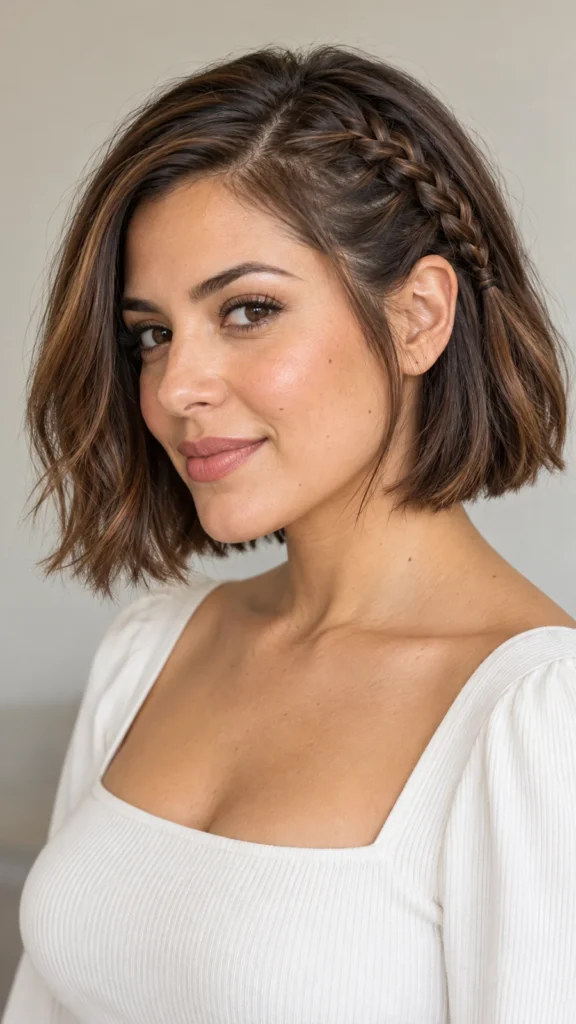
One small braid adds a visible detail without needing to gather the whole bob. Leave the rest loose so the haircut keeps its familiar outline. This works when the front section is long enough to cross several times and reach a comfortable fastening point.
- Best For: Chin-length or longer front sections.
- How to Style: Take a narrow section above one temple, make a loose three-strand braid and secure it above the ear.
Sophie’s Tip: Place the pin where it can hold the braid without pressing into glasses.
2. Half-Up Braids Joined at the Back
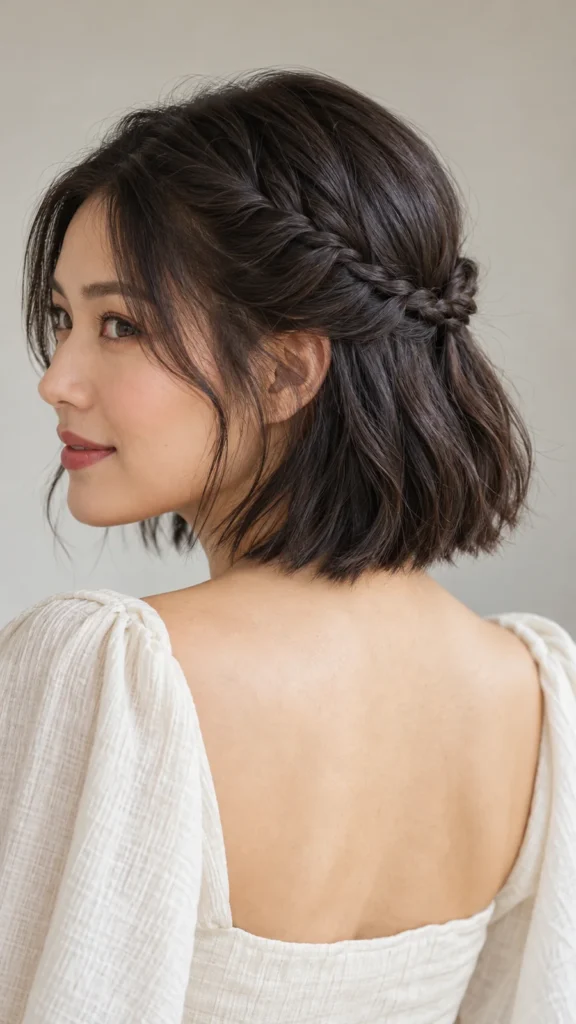
Two small side braids create a half-up detail while leaving the lower bob free. Joining them at the back keeps the front clear without forcing shorter nape sections into a fastening. Keep the sections modest so their weight does not pull on the temples.
- Best For: Bobs with front sections that reach the back.
- How to Style: Braid a narrow section from each side and join the ends with a small covered elastic or smooth clip.
Sophie’s Tip: Choose equal-sized sections for a balanced connection.
3. Braided Fringe Swept to One Side
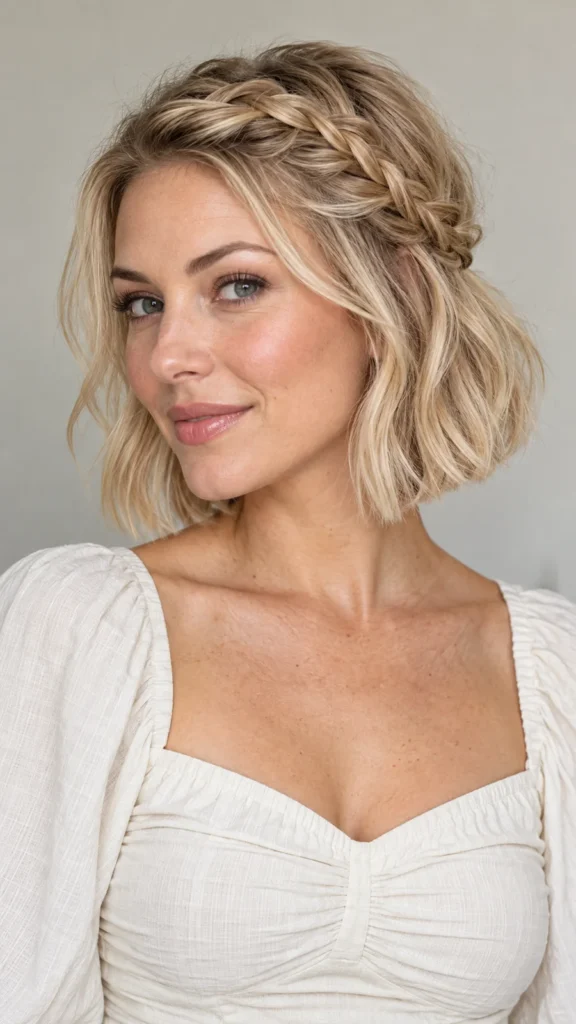
A braided fringe gathers front pieces sideways rather than letting them fall across the eyes. It needs sufficient fringe length to add hair gradually into the braid. If the shortest pieces keep escaping, a simple side pin may be easier than making the braid tighter.
- Best For: Long bangs or front framing on a bob.
- How to Style: Start near your preferred part and braid along the front, adding small sections as you move toward one temple.
Sophie’s Tip: Let the braid follow the hairline comfortably instead of pulling it flat.
4. Two Small Braids Above One Ear
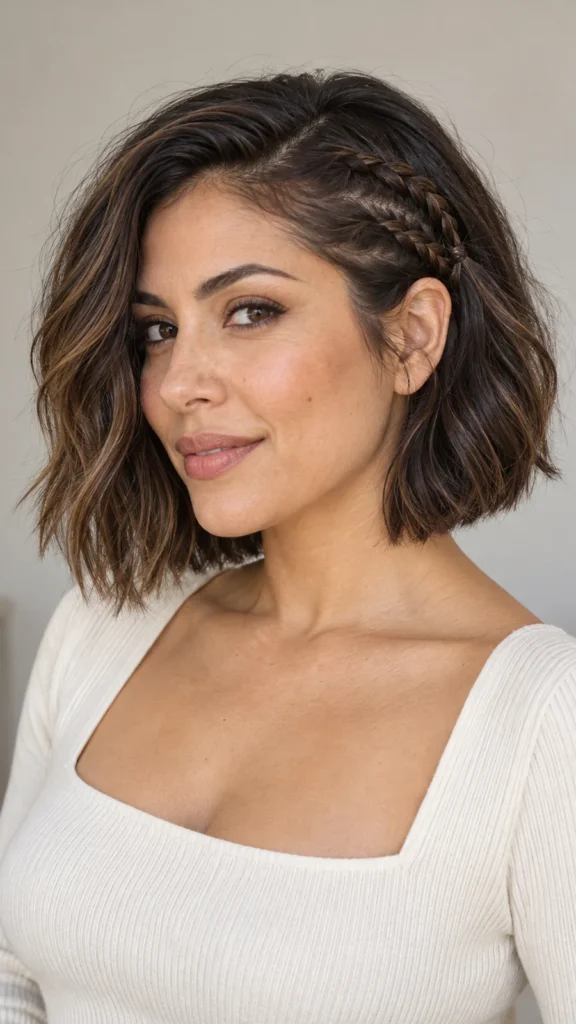
Two narrow parallel braids give one side a clear detail while the opposite side stays loose. Keep the braids short and proportionate to the bob. They do not need to travel all the way around the head to make the shape readable.
- Best For: Short bobs with usable side length.
- How to Style: Divide a small side panel into two sections, braid each loosely backward and secure separately.
Sophie’s Tip: Keep both fastenings away from the exact spot where an earring or frame arm rests.
5. Mini French Braid Through the Top
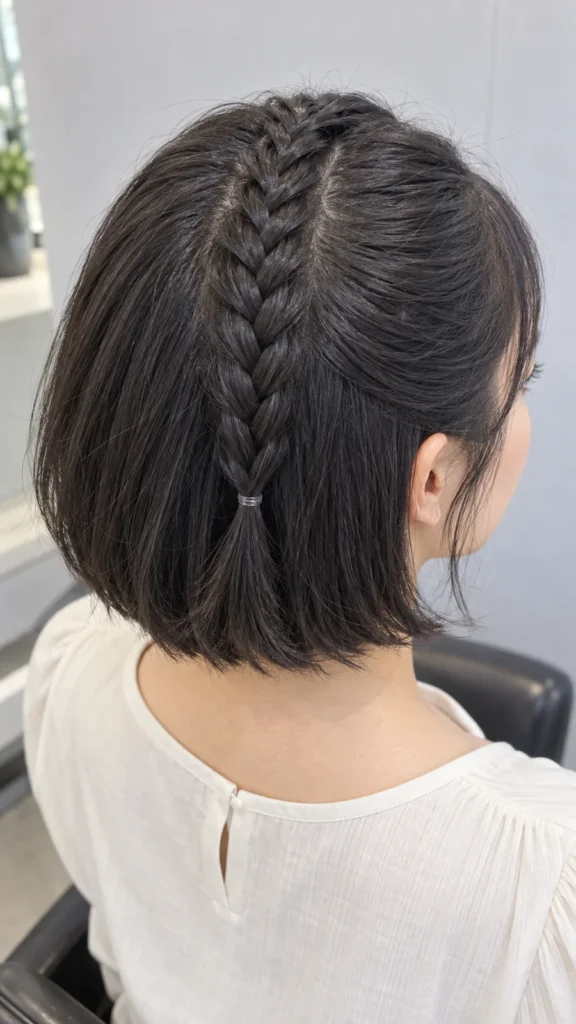
A small French braid gathers the top while leaving the sides and nape loose. This is useful when the upper layers have enough length to join gradually but the bottom sections are too short for a full braid. The loose lower hair keeps the overall style soft.
- Best For: Bobs with longer top sections.
- How to Style: Begin with a small top section, add a little hair from each side and stop before the sections become too short.
Sophie’s Tip: Secure at the stopping point rather than stretching the braid to the nape.
6. Side Braid With Loose Natural Curls
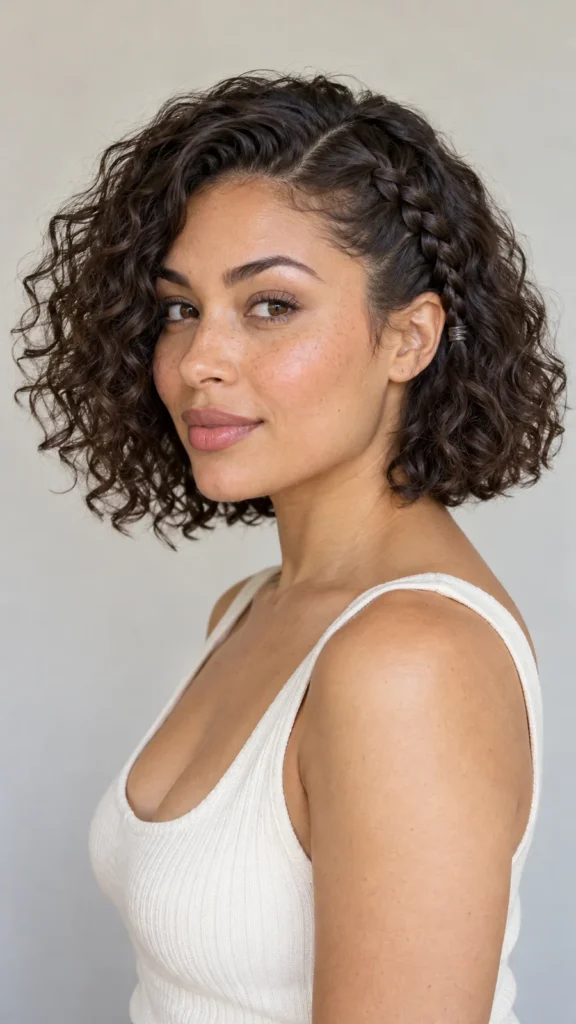
A narrow side braid gives short curls a defined detail while most of the texture remains loose. Avoid brushing the whole hairstyle smooth just to add the braid. Work with a small section and leave enough room at the roots for comfort.
- Best For: Curly bobs with a braidable side section.
- How to Style: Separate one side section gently, braid loosely backward and fasten with a suitable smooth pin or small band.
Sophie’s Tip: Keep the braid small enough that it does not drag down the surrounding curls.
7. Short Coily Hair With Front Cornrows
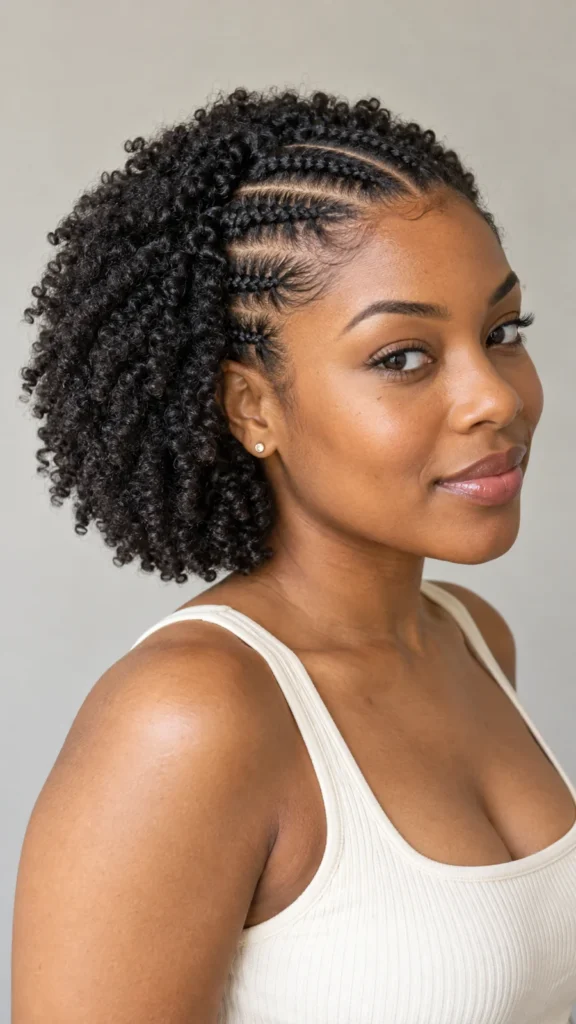
A few front cornrows can keep the face clear while the remaining coils stay loose. Placement and tension matter more than achieving a very flat finish. A stylist can help plan the pattern if you are unfamiliar with braiding close to the scalp.
- Best For: Coily hair with enough length to braid comfortably.
- How to Style: Create a few small front cornrows ending before the loose rear section, or ask a stylist for a gentle version.
Sophie’s Tip: The finished style should feel comfortable; loosen or remove any braid that pulls.
8. Half-Up Single Braid
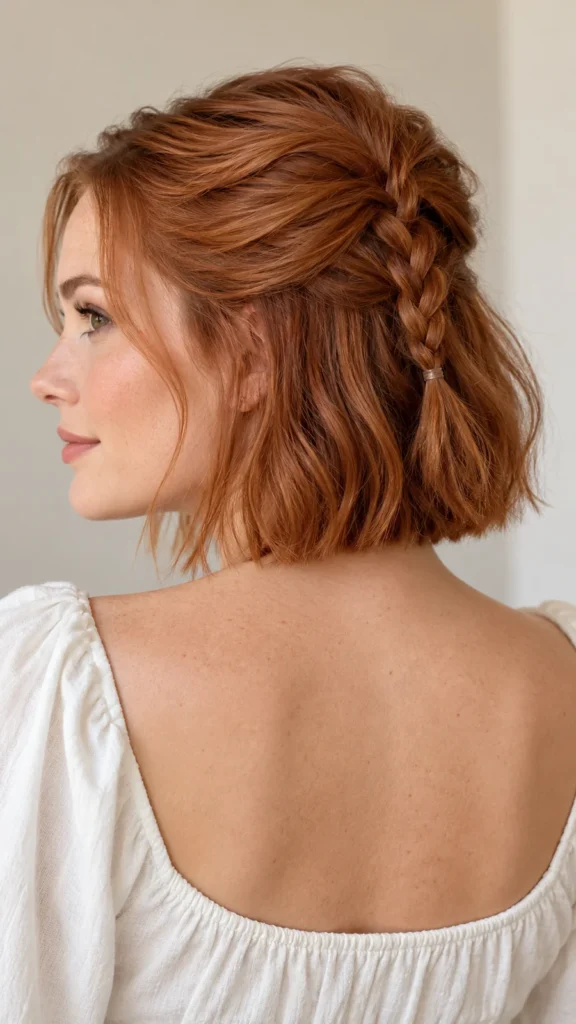
A single braid at the back makes a simple half-up style feel more deliberate. The front sections gather together while the shorter lower lengths remain loose. It is an option for days when you want one clear braid rather than several small details.
- Best For: Bobs with upper sections that meet at the back.
- How to Style: Gather the upper sections loosely, braid the gathered tail in three strands and secure its end.
Sophie’s Tip: Stop braiding while there is enough tail left for the band to hold securely.
9. Narrow Dutch Braid on One Side
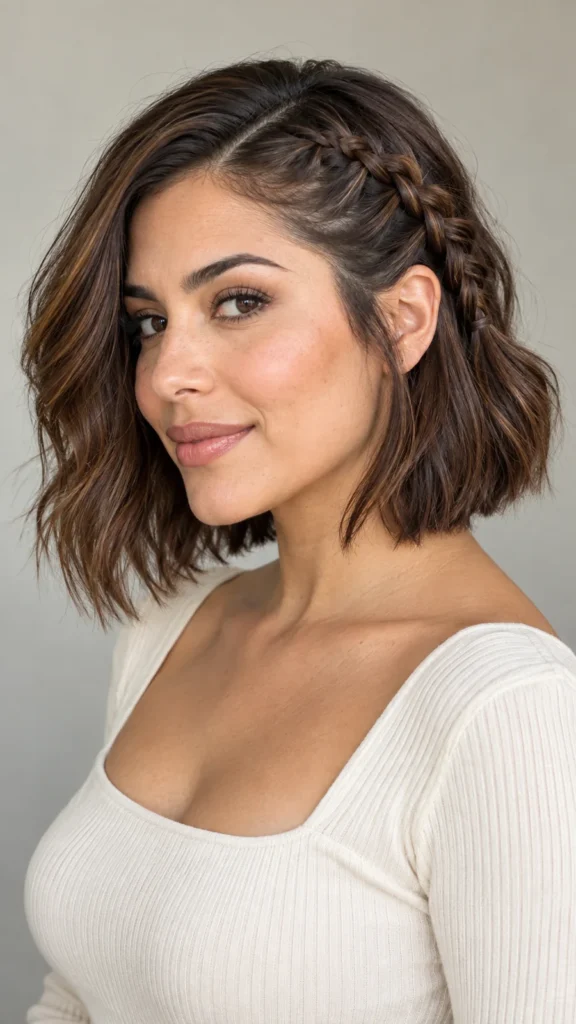
A Dutch braid crosses the outer strands underneath, creating a raised line rather than a flat-looking braid. On short hair, keep the path compact and work within the length available. A small side braid can show the structure without requiring a complete crown.
- Best For: Bobs with longer side sections.
- How to Style: Begin above one temple, cross strands underneath and add small sections while moving backward.
Sophie’s Tip: Use a rear-side mirror to check the fastening without tugging the braid.
10. Two Half-Up Braided Pigtails
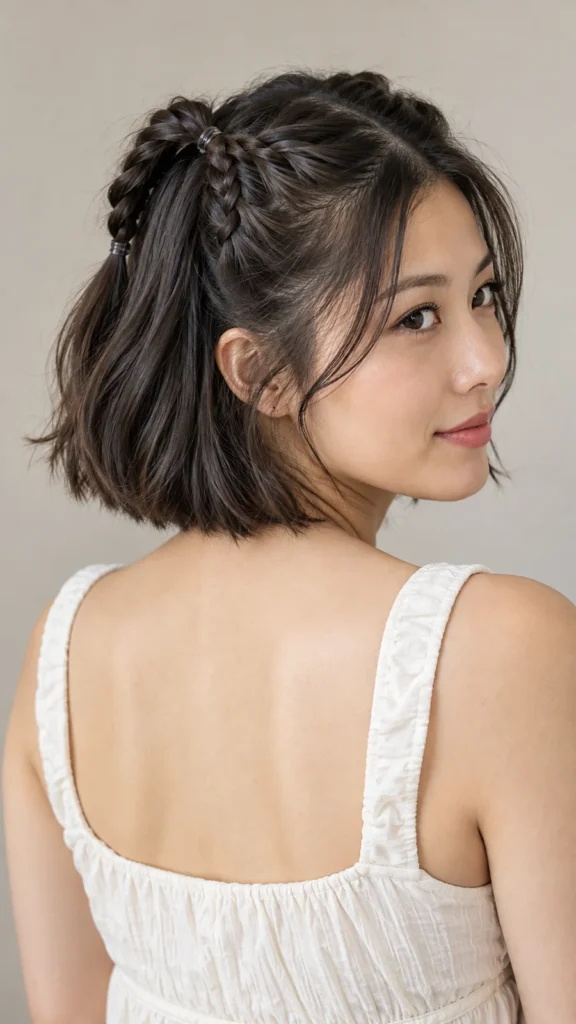
Two upper braids give the hairstyle a playful shape while the lower bob stays down. The gathering points can sit toward the back rather than directly on top. Adjust their position until they feel comfortable and do not pull against short front sections.
- Best For: Bobs with upper sections long enough to braid.
- How to Style: Divide the upper hair into two sections, fasten each loosely and braid the small tails.
Sophie’s Tip: Keep the lower hair free instead of forcing it into the pigtails.
11. Braided Detail Behind the Ear
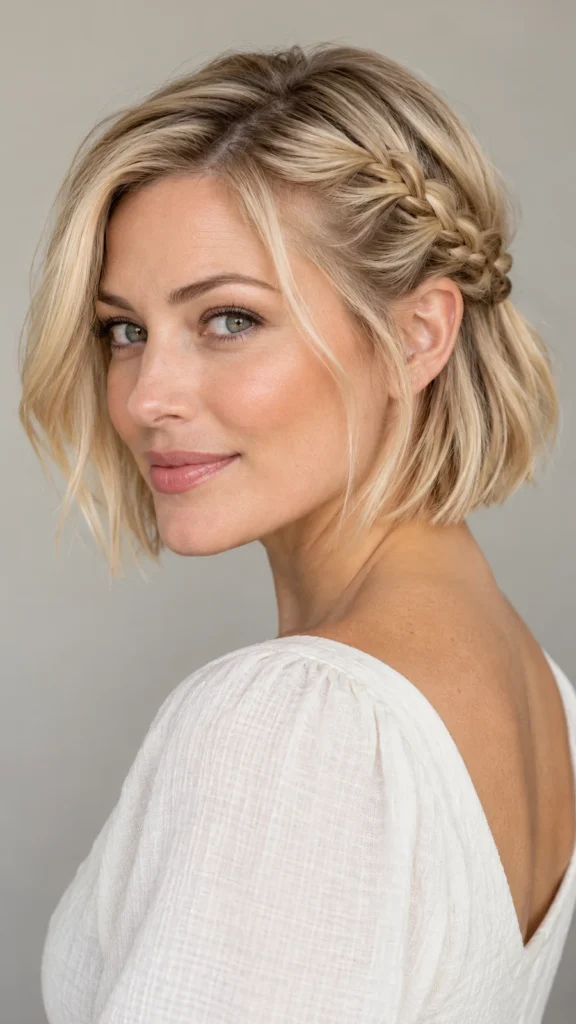
A small braid beginning near the side and finishing behind the ear offers a quieter detail. It can sit underneath some loose hair or remain visible, depending on how you arrange the bob. This suits someone who prefers a subtle braid over a prominent top pattern.
- Best For: Ear-length or longer side sections.
- How to Style: Braid a small side section loosely and pin the end behind the ear where it sits comfortably.
Sophie’s Tip: Avoid stacking several pins in a spot that presses when you turn your head.
12. Short Box Braids in a Bob Shape
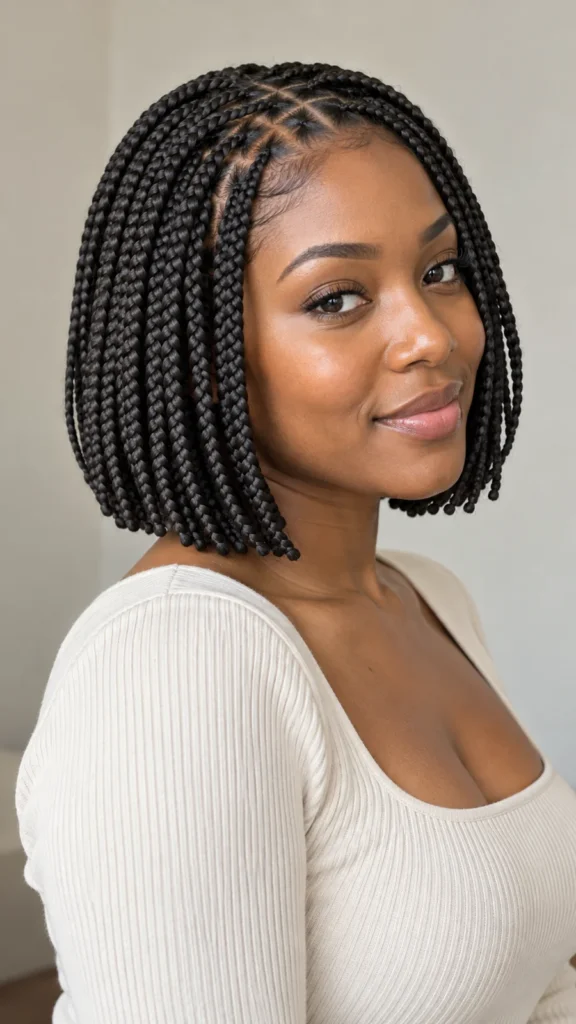
A short box-braid bob has an outline made from individual braids rather than loose hair. If extensions are used, discuss length, weight and finishing with your braider. The pictured shape should be treated as a styling reference, not a guarantee that every natural length can produce it alone.
- Best For: A professionally planned braided bob.
- How to Style: Ask your braider for a short box-braid shape with a comfortable size and weight.
Sophie’s Tip: Discuss whether extensions are needed for the shape and how the ends will be finished.
13. Small Braided Crown Over a Bob
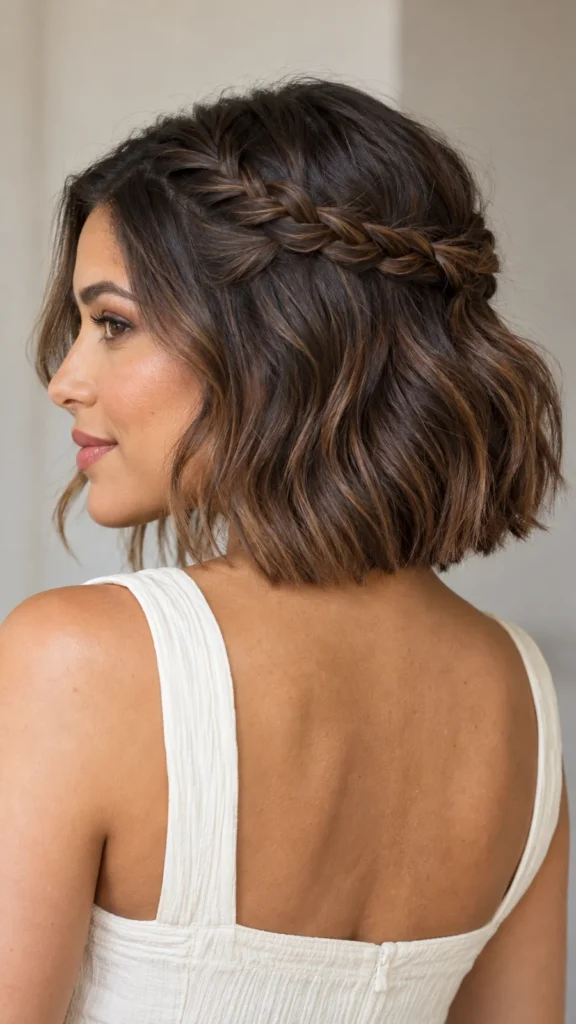
Two narrow braids can meet across the back to suggest a crown while the lower bob stays loose. This needs enough side length to reach the connection point. Keep the crown partial if a full wrap would require tension or leave many unsupported ends.
- Best For: Longer bobs with side sections that reach backward.
- How to Style: Make a braid on each side, bring them across the back and pin the ends securely.
Sophie’s Tip: Let the lower bob remain visible so the crown does not hide the haircut.
14. Side Cornrows With Loose Coils
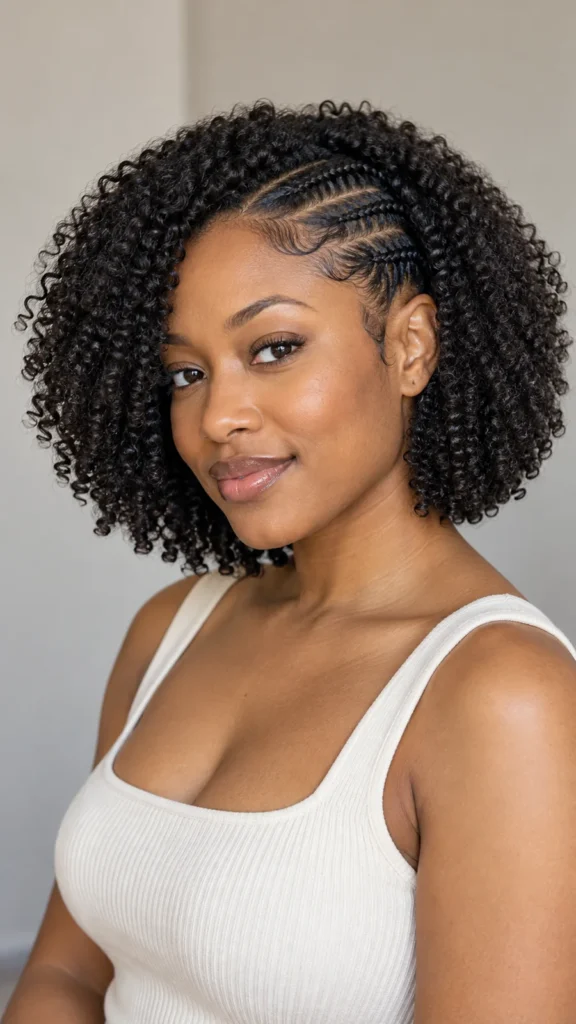
A few cornrows on one side create contrast beside loose short coils. The pattern can follow the preferred side direction while leaving the rest of the volume intact. Agree on the size and path before braiding, especially if you want a gentle, understated version.
- Best For: Natural coily hair with suitable side length.
- How to Style: Ask a braider for a few side cornrows ending where the remaining coils stay loose.
Sophie’s Tip: Choose a comfortable pattern and check for pulling around the temples.
15. Half-Up Braids With a Small Ribbon
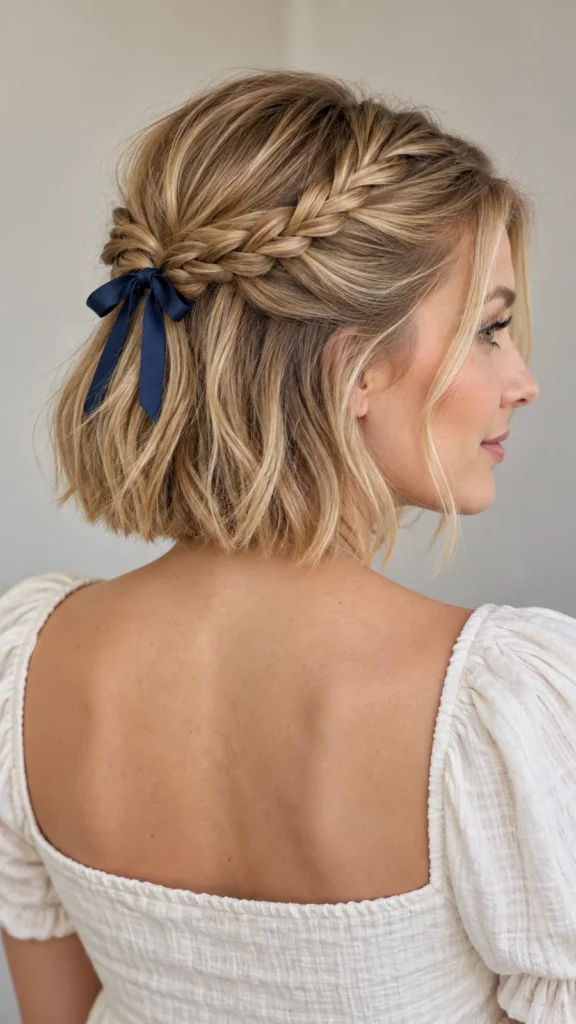
A small ribbon adds one finishing detail to joined half-up braids. Use a proper fastening beneath it rather than asking the ribbon to hold the hairstyle. Keeping the bow compact lets the braid structure remain the main feature on a short bob.
- Best For: Bobs with upper sections that meet at the back.
- How to Style: Braid two small side sections, join them securely and tie a narrow ribbon over the connection.
Sophie’s Tip: Keep the ribbon tails shorter than the loose bob ends.
Choose a Braid That Fits Your Haircut
Start with one small section and check the result from the side and back. If a braid cannot reach its fastening comfortably, shorten the path or choose a half-up version. For cornrows or extension braids, discuss the pattern and weight with your braider before starting.
Compare short-cut shapes before choosing your braid in our pixie haircuts guide.
YOUR COMPLETE STYLE
Make the look your own
Coordinate your haircut with outfit and nail ideas.
COMPLETE MY LOOK →
ABOUT THE AUTHOR
Sophie Marlowe
Sophie Marlowe is the fashion and beauty editor behind HerCurvesEdit. She shares flattering outfit ideas, modern hairstyles, nail inspiration, and practical styling guidance for women of every curve and age. Her goal is to make getting dressed feel easier, more confident, and more personal.
More from Sophie Marlowe →
Leave a Reply